
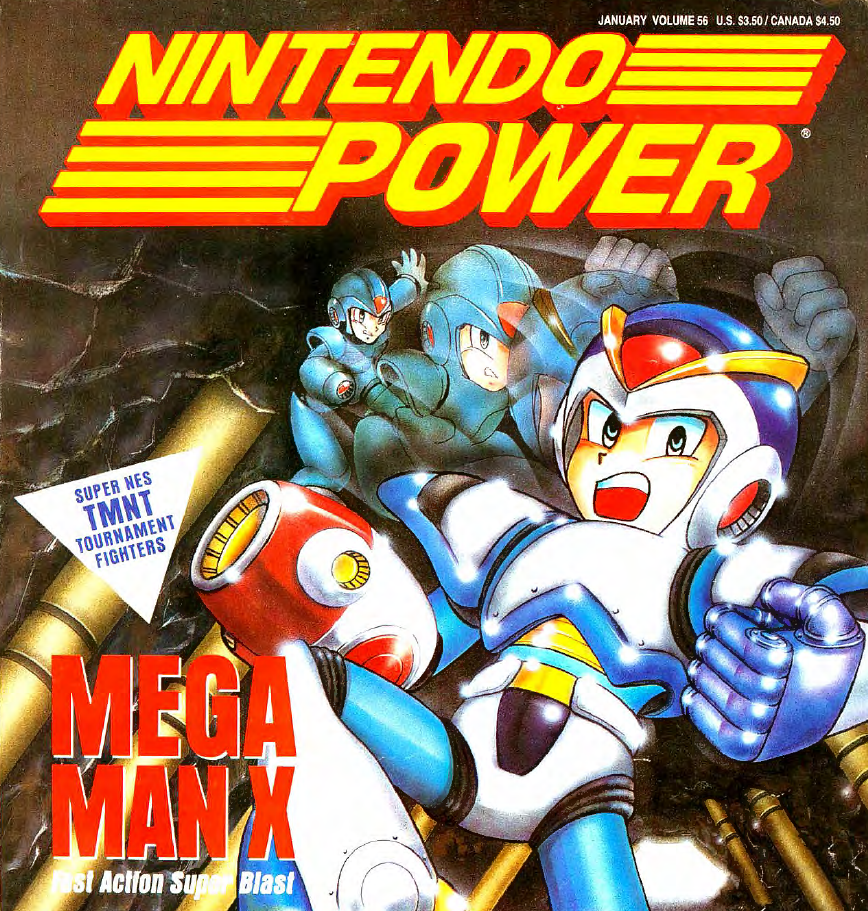
Nintendo Power ran from 1988 to 2012, following Nintendo from the NES through the launch of the Wii U. It was part strategy guide, part news source, part advertising machine, and, for a lot of kids, the only place to find out what the hell was behind that wall. This is a history of the magazine and a guided trip through all 285 numbered issues.
The CacheRat package contains the searchable issue/date/cover index, direct PDF links, CBZ extraction tools, and a bulk downloader. The magazine files are not included. It is a retrieval package for the third-party collection, not a box of scans.
Before Nintendo Power: the Fun Club
Nintendo Power did not appear out of nowhere in 1988. Nintendo already had a problem that sounds quaint now: people were buying games and then calling the company because they could not figure out what to do.
The NES had arrived in North America in 1985. Its games were getting larger and more complicated, but the information available to ordinary players was thin. You had the manual, whatever your friends knew, and perhaps a tip from somebody who claimed his cousin worked at Nintendo. That cousin was apparently employed by every video-game company in America.
Nintendo had a telephone game-counseling operation and a growing customer database. Gail Tilden and Howard Phillips helped turn that relationship into the Nintendo Fun Club and its newsletter, which began in 1987. The newsletter carried game information, tips, previews, and reader material. After seven issues, Nintendo expanded the idea into a much larger magazine.
The first issue of Nintendo Power went out in the summer of 1988. Existing Fun Club members received it free. It was not merely a catalog with a few screenshots attached. Nintendo had realized that information itself could keep people interested in the hardware.
That was the basic machinery.
A kid gets stuck. The magazine helps. The kid keeps playing. The kid sees another game in the magazine. The next cartridge starts looking necessary.
The first issue looked like somebody had built Mario in a workshop
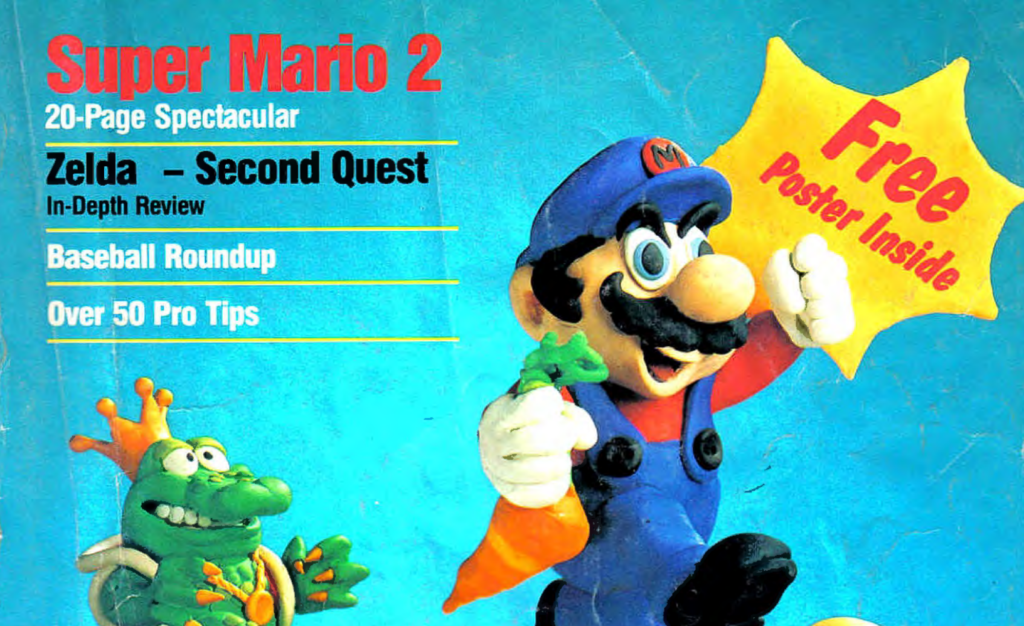
The July–August 1988 debut featured Super Mario Bros. 2. Its cover was not a normal game screenshot. Nintendo commissioned a clay Mario from Will Vinton Studios and photographed it for the cover.
That is a pretty good statement of intent. The magazine was going to make the games feel larger than the television.
Inside, the early format leaned heavily into useful information: maps, screenshots, strategies, secrets, and illustrated explanations. The first issue included extensive Super Mario Bros. 2 coverage and a map for the second quest of The Legend of Zelda.
A map was a serious piece of equipment in 1988.
You could not pull up a walkthrough on the phone beside you. You could not search a video for the exact room. If you had a magazine showing the route, you had something your friends might need to borrow. Or photocopy. Or return with a suspiciously folded page.
Nintendo Power made that kind of information feel official.
What the magazine actually did for players
The old issues are worth reading because they show how games were understood before instant answers became normal.
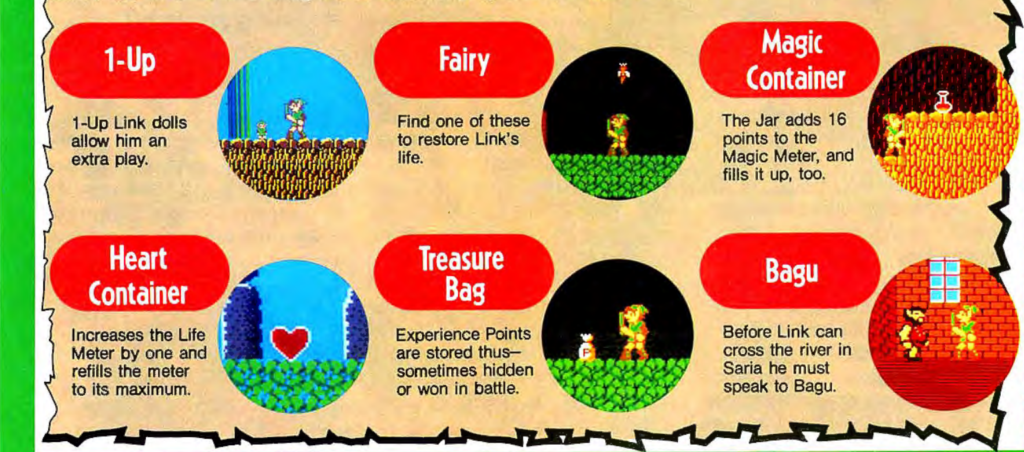
Maps were one of the biggest attractions. A two-page dungeon map could turn an impossible-looking game into a series of manageable rooms. The maps also showed how designers expected players to understand space. Secret passages, item locations, and room connections became visible in a way the game itself often did not provide.
Classified Information dealt in codes, tricks, hidden features, and things that felt like forbidden knowledge even when Nintendo was the one printing them. The name did a lot of work. A button sequence becomes much more interesting when it is presented like a document somebody wasn’t supposed to leave on the copier.
Counselor’s Corner came out of the same practical problem as the original game hotline. Players were getting stuck in recognizable places. The magazine could address those bottlenecks for thousands of readers at once.
Player’s Pulse gave readers a place to send letters, questions, drawings, and opinions. Player’s Poll contests and the Power Charts made the magazine feel like a continuing conversation rather than a one-way instruction book.
Then there were the comics.
Howard Phillips, a real Nintendo employee and the public face of the Fun Club, appeared alongside Nester, a fictional kid who knew everything about games until he actually had to play one. Howard & Nester ran through the early years; after Phillips left Nintendo, the strip became Nester’s Adventures and continued through 1993.
The comic was useful because it gave the magazine a personality. Nintendo could explain a game mechanic without making every page look like a technical manual. Nester could be wrong, get embarrassed, and come back next month.
He was also a mascot for the sort of kid who would argue about a game for twenty minutes and then ask where the second dungeon was.
The magazine was advertising. That does not make the history less interesting.
Nintendo Power was an official Nintendo publication. During its original Nintendo of America years, it was not an independent consumer watchdog. It existed to support Nintendo’s business, and its coverage naturally reflected that.
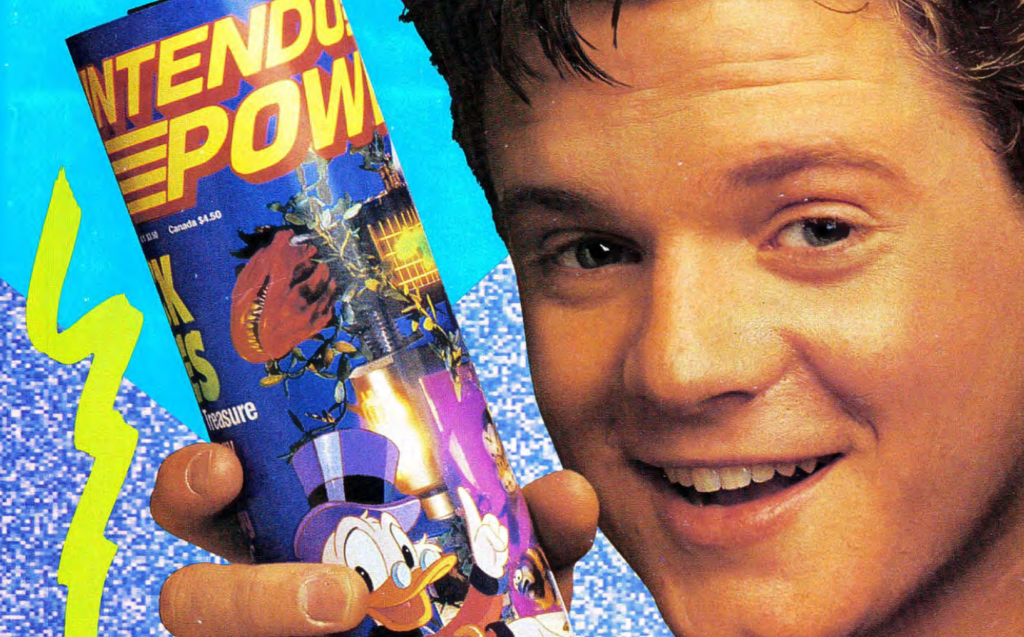
That matters when reading it now.
A glowing preview is evidence of what Nintendo wanted players to anticipate. A cover tells you what the company considered important enough to put in front of millions of readers. A game receiving a large map feature may have been receiving serious promotional support.
The magazine’s usefulness and its promotional purpose were not mutually exclusive. A strategy guide could help you finish a game and also make you want the next one.
In fact, that combination is part of why the archive is historically valuable. It preserves not just the games, but the way Nintendo presented them.
The NES years: a whole game could fit inside the magazine
The first two years were especially map-heavy. The NES library was expanding, and Nintendo Power treated many games as places to be investigated.
Super Mario Bros. 2 brought strange new mechanics and a world full of things to pick up. Castlevania II had cryptic clues and a day-night cycle. Zelda II mixed action with experience points and a larger adventure structure. Ninja Gaiden brought cinematic storytelling into an action game. Mega Man II turned boss order and weapon weaknesses into playground strategy.
Those are very different games, but the magazine could make all of them legible.
It also helped establish the idea that a video game was something you could study. You could read about it before owning it. You could learn the map. You could memorize a boss weakness. You could become the person who knew the trick.
The information had social value.
The strategy-guide experiment
In 1990, Nintendo Power began inserting dedicated strategy guides into the numbered sequence. Super Mario Bros. 3, Ninja Gaiden II, Final Fantasy, and the four-player guide occupied numbers 13, 15, 17, and 19.
These were not ordinary issues with one large feature. They were specialized books devoted to helping players through particular games or types of play.
The numbering can look strange in a modern archive because the regular bimonthly issues and the special guides were interleaved. By January 1991, the magazine had moved to a conventional monthly schedule.
The result was a publication that could be both a periodical and a reference library.
The SNES years: the pictures got bigger, and so did the games
When the Super Nintendo arrived, Nintendo Power had to explain a new kind of spectacle.
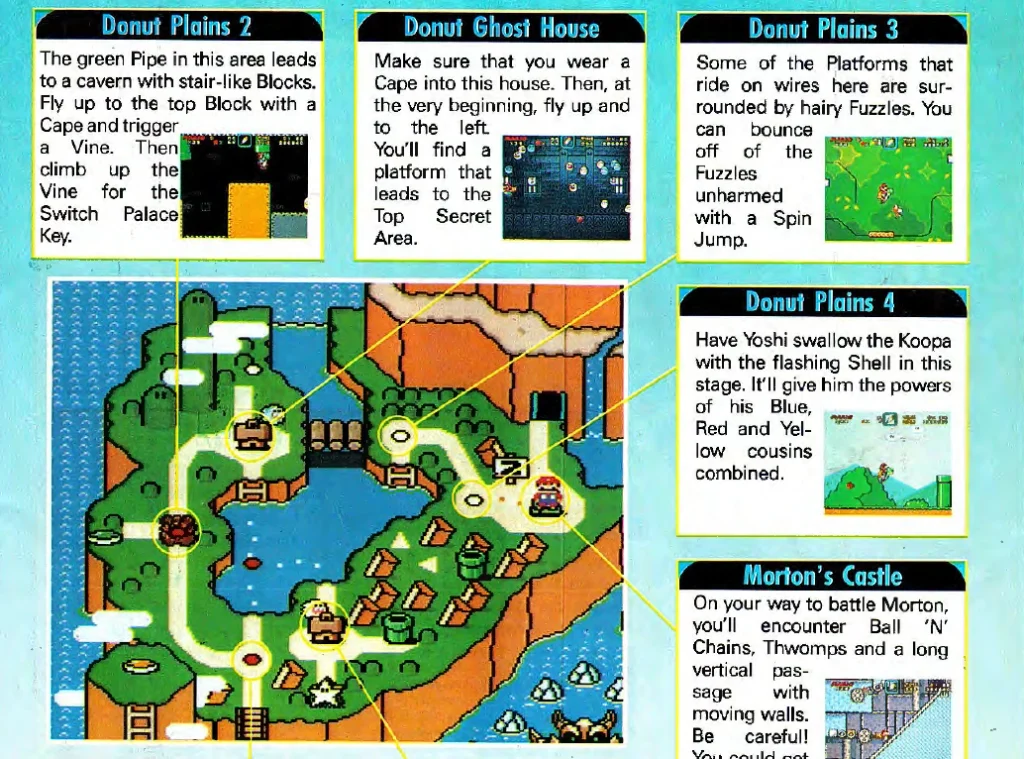
The NES had already produced ambitious games, but the SNES brought richer colors, more elaborate animation, Mode 7 effects, larger role-playing games, and soundtracks that made a television speaker seem briefly respectable.
Super Mario World introduced Yoshi and a huge interconnected adventure. A Link to the Past made Hyrule feel like a place with history. Street Fighter II turned living rooms into small competitive arenas. Star Fox made polygons a selling point. Secret of Mana and Final Fantasy II showed how much more complicated console RPGs could become.
The magazine’s visual presentation mattered more than ever. Screenshots were not merely evidence that a game existed. They were a way to sell the idea that the new machine could do things the old one could not.
And then there was Donkey Kong Country.
The November 1994 issue arrived during a period when pre-rendered graphics were being promoted as something extraordinary. Looking back, the technology is interesting. At the time, the screenshots were the argument.
Nintendo Power was very good at turning a technical change into something a kid could understand: look at this thing.
The N64 years: the magazine had to explain 3D
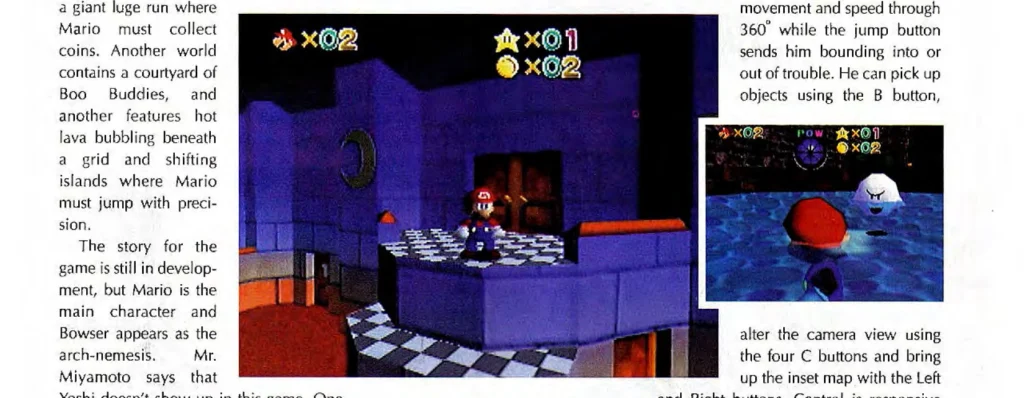
The Nintendo 64 changed the problem again.
A screenshot of Super Mario Bros. 3 could communicate a lot. A screenshot of Super Mario 64 could show the graphics, but it could not easily explain the feeling of moving around a three-dimensional space with an analog stick.
The magazine had to sell movement, camera control, scale, and new kinds of game design through still images and written descriptions.
The 1996 issues are particularly interesting for that reason. Super Mario 64 appears as a major feature before and around the North American launch. The magazine was documenting a transition that players now take for granted.
The N64 years also brought a remarkable run of games: Mario Kart 64, Star Fox 64, GoldenEye 007, Banjo-Kazooie, F-Zero X, Ocarina of Time, and Majora’s Mask.
Some of those games became permanent reference points for their genres. Others are interesting because they show what developers were trying when 3D was still a little awkward.
A magazine could make an awkward experiment look like the future. Sometimes it was right.
Pokémon changed the magazine’s audience
Pokémon deserves its own section because it changed what Nintendo’s business looked like.
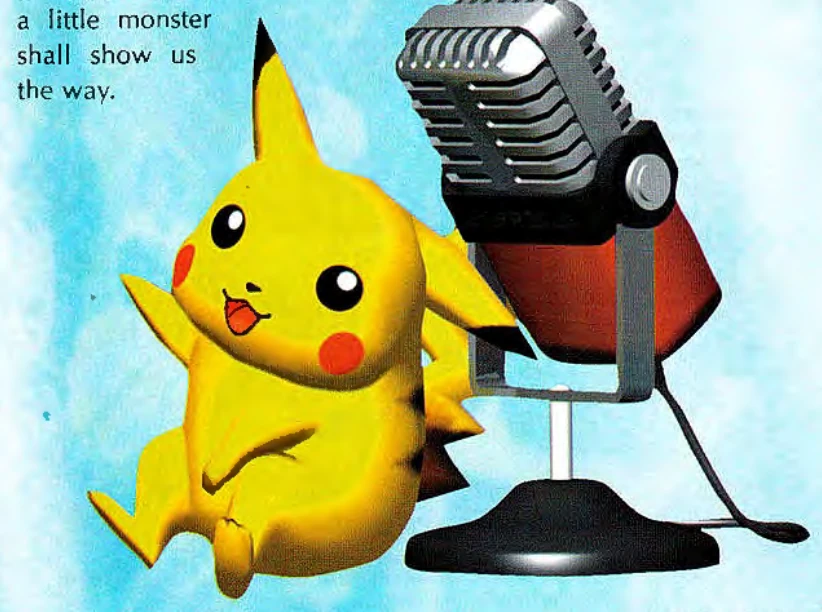
The Game Boy was already a success, but Pokémon gave it a new social structure. Trading, collecting, version differences, link cables, rumors, and playground negotiation became part of the experience.
Nintendo Power covered Pokémon through previews, strategies, promotional material, and related features. By the late 1990s and early 2000s, Pokémon was no longer a side attraction. It was one of the main reasons people were paying attention to Nintendo.
The archive shows that shift clearly. Pokémon Snap, Yellow, Stadium, Gold and Silver, Crystal, Ruby and Sapphire, Emerald, Diamond and Pearl, and later generations all appear across the run.
A useful thing to remember when reading those issues: Pokémon was not always a franchise with decades of accumulated explanation. There was a time when the magazine had to introduce the idea that two versions of a game were supposed to interact with each other.
GameCube and Game Boy Advance: two different Nintendo worlds
The early 2000s issues show Nintendo operating in two distinct directions.
The GameCube was a powerful home console with games such as Luigi’s Mansion, Super Smash Bros. Melee, Metroid Prime, The Wind Waker, and Resident Evil 4. The Game Boy Advance carried a huge portable library, including Zelda, Pokémon, Fire Emblem, Advance Wars, and a growing collection of RPGs and remakes.
Nintendo Power had to cover both.
The result is a useful record of a period when Nintendo was competing aggressively in the home-console market while remaining extremely strong in handheld gaming.
It was also a period when the magazine could no longer assume that every important game was an obvious Nintendo-style game. Resident Evil, Metal Gear Solid, Soulcalibur, and other third-party releases appear beside Mario and Zelda.
The GameCube era is especially good for seeing the gap between Nintendo’s public image and the actual variety of games on its machines.
DS and Wii: the audience gets wider
The Nintendo DS and Wii years changed the tone of the industry.
The DS introduced two screens, touch input, and a different approach to portable play. The Wii made motion control its central selling point. Nintendo was no longer only trying to convince existing players that the next machine had better graphics.
It was trying to convince people who did not normally play games that they might enjoy one.
Nintendo Power followed that shift. The later issues cover familiar series, but also games built around touch controls, motion controls, music, fitness, and unusual interfaces.
The Wii years are not just a list of family-friendly games, either. They include Metroid Prime 3, No More Heroes, MadWorld, Silent Hill: Shattered Memories, and other titles that complicate the idea that the system was only for bowling with your relatives.
The magazine had to cover a much broader audience than the NES-era kid who wanted a map.
The Future US years
Nintendo Power changed publishers in late 2007, when Future US took over publication under license from Nintendo.
That is an important dividing line. The magazine still carried the Nintendo Power name, but the editorial operation was no longer the same in-house Nintendo publication that had started in 1988.
The later issues increasingly resemble a conventional games magazine, with previews, reviews, interviews, and broader editorial coverage. The old identity did not disappear completely, but the relationship between publisher and platform holder had changed.
By then, the internet had also changed the value of print information.
A magazine could still offer good writing, interviews, artwork, and a carefully assembled issue. It could not compete with the speed of a website for breaking news. A printed cheat code was no longer the only way to learn a cheat code.
The old business model was getting squeezed from both directions.
The last issue
Nintendo Power’s final numbered issue was 285, dated December 2012.
It arrived at the beginning of the Wii U era, which makes the ending feel unusually neat. The magazine had begun with the NES and finished as Nintendo launched another home console.
The final issue was deliberately retrospective. It included a list of 285 notable Nintendo games, a year-by-year look at the magazine, and memories from former and current staff. The cover echoed the original Super Mario Bros. 2 cover, bringing the run back to its beginning.
That is a better ending than simply stopping after a normal preview issue.
The magazine was gone, but the old questions were still there. What should I play? How do I get past this part? Is this game worth buying? What is Nintendo doing next?
The answers had moved to different places.
Why the old issues are still worth reading
There are several reasons to read Nintendo Power now, and nostalgia is only one of them.
The games are preserved in their original context. A modern review knows what happened afterward. An old preview does not. Reading a 1995 Virtual Boy feature before the system’s failure became common knowledge is a different experience from reading a retrospective that begins with the punchline.
The advertisements are historical evidence. Prices, accessories, slogans, mail-order offers, and the way games were positioned all tell you something about the market. A full-page ad for a forgotten peripheral can be more interesting than the review beside it.
The maps preserve design knowledge. Some games were built around secrets, hidden routes, and information that was not obvious from the screen. The magazine shows how that information was communicated to players.
The reader sections preserve the culture. Letters, drawings, contests, and rankings show what people cared about before every opinion became a public post.
The mistakes are part of the record. Old previews contain changed names, unfinished screenshots, optimistic release windows, and ideas that never reached the final game. Those differences are often more interesting than a perfectly accurate modern summary.
And sometimes you just want to look at a 1992 advertisement for a controller shaped like it was designed by a committee that had never held a hand.
That is also a valid use of an archive.
The complete numbered run
The entries below follow the supplied CacheRat master index. Dates and cover labels are retained from that index, with obvious text-encoding errors in game names cleaned up. The highlights are short historical notes about the featured game or the period. They are not a claim that every individual page of every scan has been inspected.
1988–1990: The NES takes over
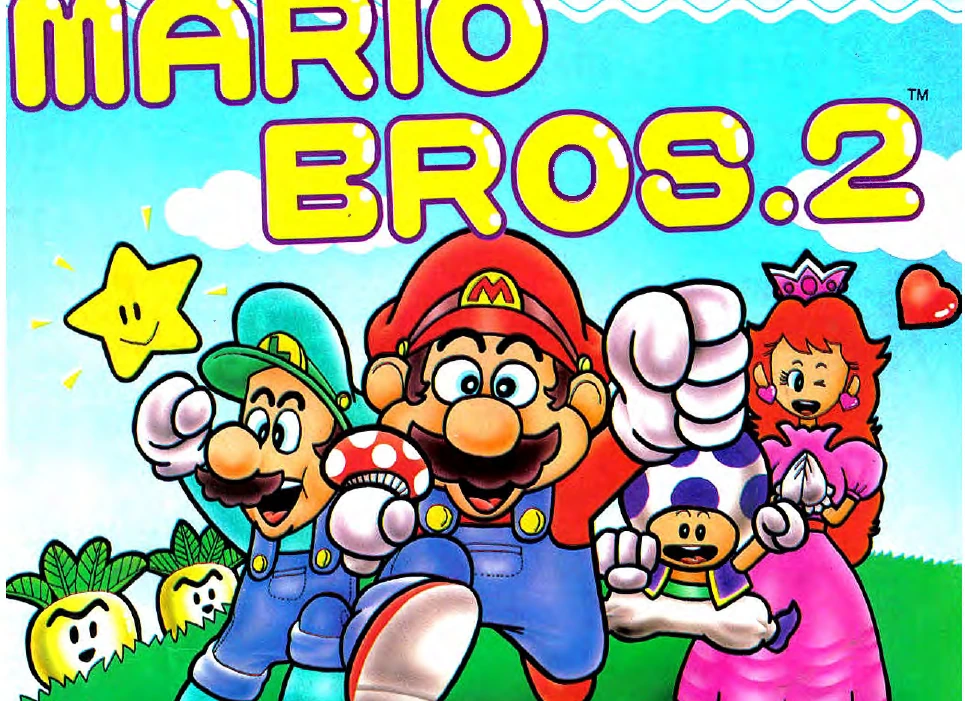
001 | July–August 1988 | Super Mario Bros. 2
The beginning. The clay Mario cover is still one of the magazine’s most recognizable images. The issue introduced the large-format strategy approach, including extensive Mario coverage and a map for Zelda’s second quest.
002 | September–October 1988 | Castlevania II: Simon’s Quest
A game built around exploration, cryptic clues, and a day-night cycle. This is exactly the kind of NES adventure that made a printed map and a reliable explanation valuable.
003 | November–December 1988 | Track & Field II
Konami’s sports sequel represents the era of competitive button-mashing and multi-event games. The magazine’s early covers were not limited to Mario and Zelda; Nintendo wanted the whole NES library to look important.
004 | January–February 1989 | Zelda II: The Adventure of Link
The odd Zelda sequel: side-scrolling combat, experience points, towns, spells, and a large overworld. It remains a useful reminder that Nintendo’s major series were still experimenting with their basic formulas.
005 | March–April 1989 | Ninja Gaiden
Tecmo’s action game brought cinematic cutscenes and a surprisingly elaborate story to the NES. The difficulty also made it a natural subject for the magazine’s strategy-heavy approach.
006 | May–June 1989 | Teenage Mutant Ninja Turtles
The first NES Turtles game was an action-adventure rather than the later arcade-style brawler. Its interconnected areas and notorious underwater section made it a frequent source of player frustration.
007 | July–August 1989 | Mega Man II
Eight Robot Masters, weapon weaknesses, and one of the NES’s most memorable soundtracks. The game helped establish the Mega Man formula that players would argue about for years.
008 | September–October 1989 | DuckTales
Capcom turned a Disney license into a genuinely strong platformer. Scrooge’s pogo-cane mechanic gave the game a distinctive feel, and the soundtrack became almost as famous as the game itself.
009 | November–December 1989 | Tetris
A small cover for a very large cultural event. Tetris helped make the Game Boy a machine people wanted even if they did not care about Mario, and its simple rules made it accessible across generations.
010 | January–February 1990 | Batman
Sunsoft’s NES Batman is remembered for its dark presentation, wall-jumping, and difficult action. The cover also shows how movie licensing and video games were becoming increasingly intertwined.
011 | March–April 1990 | Super Mario Bros. 3
One of the defining NES releases. The overworld map, suits, secrets, and enormous variety of stages made it a game people could study for months.
012 | May–June 1990 | Super C
Konami’s sequel to Contra kept the two-player run-and-gun formula moving. A good example of the period when learning enemy patterns and knowing where to stand could mean the difference between finishing a game and starting over.
013 | July 1990 | Super Mario Bros. 3 Strategy Guide
The first of the numbered strategy-guide issues. It treated Mario’s eight worlds as a complete reference project, with maps and explanations rather than a normal assortment of magazine features. The supplied index labels it July; contemporary material announced the guide for June 1990.
014 | July–August 1990 | Chip ‘n Dale Rescue Rangers
Capcom’s Disney platformer made cooperative play unusually approachable. Picking up crates, throwing objects, and working together gave it a different rhythm from the usual NES action game.
015 | August 1990 | Ninja Gaiden II: The Dark Sword of Chaos Strategy Guide
A dedicated guide for a game full of difficult platforming and cinematic ambition. The shadow-clone mechanic is one of its most distinctive ideas, and the guide format suited a game that could punish a single bad jump.
016 | September–October 1990 | Maniac Mansion
A strange and important NES release. Lucasfilm Games’ adventure brought the SCUMM interface, multiple playable characters, and puzzle-solving to a console audience more accustomed to action games.
017 | October 1990 | Final Fantasy Strategy Guide
The original Final Fantasy was a substantial undertaking for an NES player. Party classes, equipment, spells, and a large world made a dedicated reference book particularly useful.
018 | November–December 1990 | Dr. Mario
Nintendo’s falling-block puzzle game gave Mario a medical career he was probably not licensed to have. Its two-player competition and simple rules made it one of the NES and Game Boy era’s durable puzzle games.
019 | December 1990 | 4-Player Extra Strategy Guide
A guide built around multiplayer gaming. It also marks the end of the special strategy guides being interleaved into Nintendo Power’s regular numbered sequence.
020 | January 1991 | Mega Man III
The monthly era begins with Mega Man’s third NES adventure. The slide and Rush introduced new movement and support mechanics, while the series’ boss-selection formula was becoming familiar.
1991: The NES is still going, but the future is arriving
021 | February 1991 | StarTropics
An American-developed Nintendo adventure with a tropical setting and a famous physical-letter puzzle. It is a good example of how games sometimes expected the player to use material outside the cartridge.
022 | March 1991 | Metal Storm
One of the NES’s more interesting late-era action games. Its gravity-reversal mechanic lets the player move between floor and ceiling, turning a simple-looking platformer into a spatial puzzle.
023 | April 1991 | Power Blade
A side-scrolling action game built around a boomerang weapon. Its non-linear stage selection and power-ups make it a useful snapshot of the NES action genre after years of refinement.
024 | May 1991 | Vice: Project Doom
Part platformer, part driving game, part shooting game. It is exactly the sort of ambitious, slightly odd NES release that can disappear behind the better-known franchises.
025 | June 1991 | Battletoads
Rare’s famously difficult action game. The Turbo Tunnel became a permanent part of gaming folklore, but the game also shows how much variety developers were squeezing out of the NES.
026 | July 1991 | Robin Hood: Prince of Thieves
A movie tie-in with more ambition than its title might suggest. It mixes adventure, combat, and different gameplay sequences rather than simply repeating one action mechanic.
027 | August 1991 | Mega Man in Dr. Wily’s Revenge
Mega Man arrives on Game Boy. The handheld game reworks familiar NES material into a portable format, showing how Nintendo’s smaller machine was becoming a serious home for established series.
028 | September 1991 | Super Mario World
The Super Nintendo era arrives in force. Yoshi, the cape, a large interconnected world, and the move to 16-bit graphics made this one of Nintendo’s most important transition games.
029 | October 1991 | Star Trek
A licensed NES adventure that belongs to the period when television and film properties were being turned into increasingly elaborate games. The appeal was not just the license, but the attempt to make an adventure out of it.
030 | November 1991 | Final Fantasy II
North America’s introduction to what Japan knew as Final Fantasy IV. The SNES brought richer storytelling, a larger cast, and the Active Time Battle system to a new audience.
031 | December 1991 | Metroid II: Return of Samus
A Game Boy sequel with a darker, more isolated atmosphere. Hunting down the remaining Metroids gives the game a different structure from the original, and its ending became important to the series’ later history.
1992: Sixteen bits and a lot of confidence
032 | January 1992 | Super Castlevania IV
A major SNES showcase with detailed animation, atmospheric music, and multi-directional whip control. It demonstrated how a familiar NES series could be rebuilt around new hardware.
033 | February 1992 | Teenage Mutant Ninja Turtles III: The Manhattan Project
The NES Turtles return to the cooperative brawler format. It is a late-era NES game that shows the machine still had plenty of life after the SNES arrived.
034 | March 1992 | The Legend of Zelda: A Link to the Past
A landmark Zelda game. The Light World and Dark World structure, elaborate dungeons, and expanded inventory helped define the series’ long-term identity.
035 | April 1992 | WWF Super WrestleMania
Wrestling games were becoming a major part of the console market. The licensed roster and recognizable personalities mattered as much as the mechanics.
036 | May 1992 | Darkwing Duck
Another Capcom Disney game with a strong platforming foundation. It is a reminder that licensed games were not automatically disposable, even if plenty of them tried very hard to be.
037 | June 1992 | Lemmings
A puzzle game built around guiding a crowd of tiny creatures through hazards. Translating its mouse-driven computer-game design to consoles was an interesting challenge in itself.
038 | July 1992 | Street Fighter II: The World Warrior
A huge moment for home fighting games. The SNES version brought the arcade phenomenon into living rooms and helped make six-button controllers feel necessary.
039 | August 1992 | Mario Paint
Nintendo turned the SNES into a drawing and music toy with its mouse accessory. The music composer became especially memorable, and the game remains a strange little branch of Nintendo’s creative history.
040 | September 1992 | Felix the Cat
A colorful platformer built around transformations and different vehicles. It belongs to the period when cartoon licenses were everywhere, but some developers still put real effort into the games.
041 | October 1992 | Super Mario Kart
The beginning of a very long argument about who threw the shell. Mode 7 tracks, character differences, and battle mode established a formula Nintendo would keep revisiting.
042 | November 1992 | Super Star Wars
A cinematic action game that tried to turn the original film into an SNES spectacle. Large sprites, varied stages, and a lot of difficulty made it memorable.
043 | December 1992 | Road Runner’s Death Valley Rally
A Warner Bros. platformer built around speed and cartoon presentation. The sort of game that can look like a minor licensed release until you actually start examining the animation and level design.
1993: The SNES library gets serious
044 | January 1993 | The Magical Quest Starring Mickey Mouse
Capcom’s Mickey platformer uses costume changes to alter the way the player moves and fights. A polished example of the Disney games that helped define the early SNES library.
045 | February 1993 | The Addams Family: Pugsley’s Scavenger Hunt
A licensed platformer with a large, maze-like structure. Its appeal is partly in the strange difficulty and the way it turns a familiar television property into a sprawling game.
046 | March 1993 | Tiny Toon Adventures: Buster Busts Loose!
Konami’s SNES platformer is remembered for its animation and varied stages. It captures the period when cartoon games were often treated as major releases rather than cheap side products.
047 | April 1993 | Star Fox
Polygons on the SNES. The Super FX chip made Star Fox a technical event, and its on-rails shooting gave Nintendo a new kind of game to promote.
048 | May 1993 | Batman Returns
Konami’s SNES beat-’em-up brought the film’s dark visual style into a side-scrolling action game. A good example of movie licensing meeting a developer that knew how to make an arcade-style brawler.
049 | June 1993 | Battletoads & Double Dragon
Two difficult action franchises in one cartridge. It is a very early-1990s idea, and the game is a useful artifact of the crossover and beat-’em-up boom.
050 | July 1993 | The Legend of Zelda: Link’s Awakening
The Game Boy gets a Zelda adventure with its own strange identity. Koholint Island, the Wind Fish, and the game’s unusual cast make it one of Nintendo’s most distinctive portable releases.
051 | August 1993 | Street Fighter II Turbo
The fighting-game arms race continues. Faster play and additional character options made the home version feel closer to the evolving arcade scene.
052 | September 1993 | Super Mario All-Stars
Four NES Mario games rebuilt for the SNES. It is an early example of Nintendo repackaging its own history as a premium product, long before remasters became an industry category.
053 | October 1993 | Super Empire Strikes Back
The second SNES Star Wars action game. It continued the series’ mix of platforming, combat, and cinematic presentation, with difficulty that did not particularly care whether you had seen the movie.
054 | November 1993 | Secret of Mana
A major action RPG with real-time combat and multiplayer support. Its world, music, and cooperative play made it one of the SNES’s most enduring role-playing games.
055 | December 1993 | Disney’s Aladdin
Capcom’s SNES adaptation is remembered for its animation and platforming. It also provides an interesting comparison with the separate Genesis version, which approached the same film differently.
1994: Big games, big graphics
056 | January 1994 | Mega Man X
Mega Man moves to the SNES with wall-climbing, dashing, armor upgrades, and a more elaborate world. It is one of the strongest examples of a series evolving without losing its basic identity.
057 | February 1994 | Bugs Bunny Rabbit Rampage
A Warner Bros. platformer with large cartoon sprites and varied stages. The cover reflects the era’s heavy reliance on recognizable animation characters.
058 | March 1994 | Wario Land: Super Mario Land 3
Wario takes over a Game Boy series that had previously belonged to Mario. The game begins establishing his own style: treasure, greed, and a different relationship with the level design.
059 | April 1994 | Ken Griffey Jr. Presents Major League Baseball
A baseball game with a major sports celebrity on the cover. It is also a snapshot of the period when sports games were becoming increasingly important to console marketing.
060 | May 1994 | Super Metroid
One of the SNES’s defining games. Its interconnected world, environmental storytelling, and movement upgrades helped establish a design language that developers still study.
061 | June 1994 | Donkey Kong
The Game Boy game begins as something familiar and then expands into a much larger puzzle-platform adventure. A good example of Nintendo using an old arcade name for something unexpectedly ambitious.
062 | July 1994 | Super Street Fighter II
More characters and another revision of the fighting-game phenomenon. The cover captures how rapidly Street Fighter was evolving during the early 1990s.
063 | August 1994 | Stunt Race FX
Another Super FX showcase, this time built around polygonal racing. The game is interesting partly because its technical ambition is so visible.
064 | September 1994 | Mortal Kombat II
Mortal Kombat’s arrival on Nintendo hardware became a major cultural and commercial event. The sequel also arrived after the controversy surrounding the original game’s censorship on SNES.
065 | October 1994 | Illusion of Gaia
An action RPG with a surprisingly melancholy story and a world inspired by real historical locations. It is one of the SNES’s more unusual adventures.
066 | November 1994 | Donkey Kong Country
Rare’s pre-rendered graphics became a major selling point. The game also helped revive Donkey Kong as a modern franchise and gave the SNES another enormous hit.
067 | December 1994 | Earthworm Jim
A platformer built around exaggerated animation and a very strange sense of humor. It is a useful reminder of how much the 1990s game industry loved mascot characters.
1995: The industry starts looking beyond 16-bit
068 | January 1995 | The Adventures of Batman & Robin
A licensed action game with strong visual presentation. The SNES version is particularly associated with Konami’s careful use of the animated series’ style.
069 | February 1995 | Mega Man X2
The X series continues with new armor upgrades and more elaborate stages. Its use of the Cx4 chip is another example of developers extending the SNES with specialized hardware.
070 | March 1995 | NBA Jam Tournament Edition
Arcade basketball at its most ridiculous. The game represents a period when sports titles could be built around spectacle, exaggerated moves, and pure competitive fun.
071 | April 1995 | Stargate
A movie-based platformer from the era when almost every major film seemed to require a cartridge. The game is interesting as part of that larger licensing culture.
072 | May 1995 | Kirby’s Dream Land 2
Kirby’s Game Boy adventure introduces animal friends and expands the series’ copy-ability mechanics. A substantial portable game from Nintendo’s increasingly mature handheld library.
073 | June 1995 | WeaponLord
A fighting game with a darker fantasy style and a more technical combat system. It is one of the less obvious titles to receive major cover attention during the fighting-game boom.
074 | July 1995 | Donkey Kong Land
Rare translates the Donkey Kong Country style to Game Boy. The result is a fascinating attempt to make a visually ambitious SNES franchise work on much smaller hardware.
075 | August 1995 | Virtual Boy
One of the most interesting covers in the entire run. Nintendo’s red-and-black 3D system was being presented as a major new product, before its commercial failure became the standard retrospective story.
076 | September 1995 | Killer Instinct
Rare’s fighting game arrives on Nintendo hardware with its distinctive combo system and pre-rendered visual style. Another example of the company’s graphics technology becoming part of the sales pitch.
077 | October 1995 | Super Mario World 2: Yoshi’s Island
A remarkable SNES platformer with a hand-drawn visual style and a different approach to Mario’s movement. Its 10-year Nintendo retrospective material also makes this a particularly interesting historical issue.
078 | November 1995 | Mortal Kombat 3
The fighting-game boom continues. New mechanics, new characters, and the continuing controversy around violent games all belong to the context of this release.
079 | December 1995 | Donkey Kong Country 2: Diddy’s Kong Quest
Rare’s sequel expands the original with more elaborate levels, secrets, and a memorable soundtrack. It is often regarded as one of the strongest games in the SNES library.
1996: Nintendo 64 is coming
080 | January 1996 | Happy NU64 Year
A cover built around anticipation for Nintendo’s next console. The name itself is a little time capsule of the company’s mid-1990s marketing.
081 | February 1996 | Killer Instinct 2
The arcade sequel appears while Nintendo’s next hardware generation is approaching. It reflects the industry’s continuing fascination with fighting games and advanced graphics.
082 | March 1996 | Super Mario RPG: Legend of the Seven Stars
Nintendo and Square combine Mario with a turn-based RPG. The result is a strange, funny, and influential game that introduced a different kind of Mario adventure.
083 | April 1996 | Earthworm Jim 2
The sequel pushes the original’s absurdity further, with varied gameplay and increasingly strange situations. It belongs to the period when mascot platformers were trying to out-weird one another.
084 | May 1996 | Ken Griffey Jr.’s Winning Run
Another major baseball release during the SNES’s later years. Sports games remained an important part of the library even as attention shifted toward new hardware.
085 | June 1996 | Super Mario 64
One of the most important covers in the magazine’s history. Mario’s move into 3D required players to learn analog movement, camera control, and a new way of understanding a game world.
086 | July 1996 | E3 1996
The industry is in transition. E3 coverage from this period is especially valuable because it captures the competition between new consoles before the eventual winners and losers were obvious.
087 | August 1996 | Tetris Attack
A puzzle game that uses Nintendo characters for the North American release of Panel de Pon. Its competitive mechanics gave the SNES another excellent multiplayer game.
088 | September 1996 | Super Mario 64
Mario returns to the cover around the Nintendo 64 launch period. The repeated attention shows how central the game was to explaining Nintendo’s new machine.
089 | October 1996 | Mortal Kombat Trilogy
A compilation-style fighting game bringing together a large roster from the series. The cover also shows Nintendo’s continuing effort to support major third-party franchises.
090 | November 1996 | Donkey Kong Country 3: Dixie Kong’s Double Trouble!
The third SNES Donkey Kong Country game arrives as the N64 era begins. A reminder that the old hardware did not immediately stop receiving major releases.
091 | December 1996 | Killer Instinct Gold
Rare’s fighting series moves to Nintendo 64. The game is part of the early attempt to establish the new console’s library beyond Mario.
1997: The N64 finds its identity
092 | January 1997 | Star Wars: Shadows of the Empire
A major early N64 release with varied gameplay, including the famous Hoth battle. It helped show that the new console could deliver large, cinematic licensed games.
093 | February 1997 | Mario Kart 64
Mario Kart moves into 3D environments. Four-player racing became one of the N64’s defining social experiences.
094 | March 1997 | Turok: Dinosaur Hunter
A first-person shooter with large environments and dinosaurs. It was an important early example of the N64 supporting a more mature-looking action game.
095 | April 1997 | Blast Corps
Rare’s demolition game is one of the console’s most unusual early releases. The objective is simple: clear a path before a runaway nuclear missile carrier reaches something unfortunate.
096 | May 1997 | Doom 64
A distinct Doom game rather than a straightforward port. Its darker atmosphere and redesigned levels made it a notable entry in the series.
097 | June 1997 | ClayFighter 63⅓
A fighting game built around clay-animation characters and parody. The title alone is a decent summary of the era’s willingness to make a joke and then build an entire cartridge around it.
098 | July 1997 | Star Fox 64
Nintendo’s on-rails shooter returns with voice acting, branching routes, and the Rumble Pak. It became one of the N64’s signature games.
099 | August 1997 | GoldenEye 007
A landmark console first-person shooter. Its single-player missions and four-player multiplayer helped change expectations for what an FPS could be on a home console.
100 | September 1997 | 100th Issue Anniversary
A major milestone. The issue included a 100-best-games feature, historical material, and a return appearance by Nester. It is especially useful as a snapshot of what Nintendo Power considered important after its first hundred issues.
101 | October 1997 | Extreme-G
A futuristic racing game with high-speed tracks and weapons. It belongs to the N64’s early period of experimenting with different approaches to racing.
102 | November 1997 | NFL Quarterback Club ’98
A sports cover from the era when the N64 was trying to establish a broad library. Football games were a major commercial category, not a side attraction.
103 | December 1997 | Diddy Kong Racing
Rare’s kart racer adds an adventure structure, multiple vehicle types, and a surprisingly large amount of single-player content. It became one of the N64’s most beloved multiplayer games.
1998: Rare, Zelda, and a very strong year
104 | January 1998 | Yoshi’s Story
Nintendo’s colorful platformer takes a different approach from Yoshi’s Island. The visual style is distinctive, and the game remains an interesting example of Nintendo experimenting with presentation.
105 | February 1998 | WCW vs. nWo: World Tour
A wrestling game from the period when wrestling was a major part of popular culture. The N64’s multiplayer strengths made it a natural home for the genre.
106 | March 1998 | 1080° Snowboarding
Nintendo’s snowboarding game became a technical showcase for animation and physics. It also helped establish the N64’s reputation for strong sports and racing experiences.
107 | April 1998 | Kobe Bryant in NBA Courtside
A basketball title associated with one of the sport’s biggest stars. The cover is a reminder of how celebrity licensing shaped the sports-game market.
108 | May 1998 | Major League Baseball Featuring Ken Griffey Jr.
Another major sports release. Nintendo’s baseball games were part of the N64’s effort to appeal beyond its familiar platforming and adventure audience.
109 | June 1998 | Banjo-Kazooie
Rare’s 3D platformer is one of the N64’s defining games. Its large worlds, collectibles, humor, and character design made it a major part of the console’s identity.
110 | July 1998 | WWF War Zone
Wrestling games were becoming increasingly elaborate. This cover captures the late-1990s period when wrestling and video games were both enormous youth-culture businesses.
111 | August 1998 | Bomberman Hero
A Bomberman game that moves away from the traditional multiplayer arena formula toward a single-player platforming adventure. An interesting detour for the series.
112 | September 1998 | F-Zero X
Sixty frames per second, thirty racers, and a very fast sense of danger. F-Zero X remains one of the N64’s most impressive racing games.
113 | October 1998 | Turok 2: Seeds of Evil
The sequel expands the original’s first-person action with larger levels and more elaborate weapons. It is also remembered for pushing the N64’s hardware hard.
114 | November 1998 | The Legend of Zelda: Ocarina of Time
One of Nintendo’s most important releases. Z-targeting, the transition to 3D Hyrule, and the game’s structure influenced action-adventure design for years.
115 | December 1998 | Star Wars: Rogue Squadron
A flight-combat game that made the N64 feel like a very good place to fly an X-wing. Its missions and visual presentation helped establish Factor 5’s reputation.
1999: Pokémon and the late N64
116 | January 1999 | Castlevania
Castlevania’s N64 transition is a useful example of how difficult the move to 3D could be. The game has an atmosphere and ambition that remain interesting even where the execution is awkward.
117 | February 1999 | Mario Party
The beginning of Nintendo’s long-running board-game series. It turned the N64’s four-controller setup into a machine for friendship damage.
118 | March 1999 | Tonic Trouble
A 3D platformer from Ubisoft, developed during the same broad period as Rayman 2. It is a lesser-known example of the genre’s late-1990s expansion.
119 | April 1999 | Beetle Adventure Racing!
A surprisingly well-regarded racing game built around Volkswagen Beetles. It is one of those licensed concepts that sounds ridiculous until the game turns out to be good.
120 | May 1999 | Star Wars Episode I: Racer
Podracing becomes a high-speed racing game. The release captures the enormous commercial push surrounding The Phantom Menace.
121 | June 1999 | Pokémon Snap
Pokémon becomes a photography game. It showed that the franchise could support experiences built around observation rather than battles.
122 | July 1999 | World Driver Championship
A racing game noted for its technical presentation on N64. It belongs to the console’s late-1990s effort to compete with more simulation-oriented racers.
123 | August 1999 | Hybrid Heaven
A strange Konami game combining science-fiction adventure with a detailed combat system. One of the more interesting N64 titles that never became a household name.
124 | September 1999 | Jet Force Gemini
Rare’s science-fiction action game mixes shooting, exploration, and a large world. It is ambitious, sometimes awkward, and very much a product of the N64 era.
125 | October 1999 | Pokémon Yellow
The Pikachu-focused version of the original Pokémon adventure. It tied the games more closely to the animated series and helped extend the first generation’s enormous popularity.
126 | November 1999 | Donkey Kong 64
Rare’s large 3D platformer arrives with the Expansion Pak requirement and an enormous amount of collecting. It is a monument to the late-1990s belief that more collectibles meant more game.
127 | December 1999 | WWF WrestleMania 2000
Another major wrestling release. The N64’s wrestling library became one of its strongest multiplayer attractions.
2000: The N64’s long goodbye
128 | January 2000 | Mario Party 2
Nintendo’s board-game series returns with new boards and minigames. The formula was already becoming a regular part of the company’s multiplayer lineup.
129 | February 2000 | Disney’s Tarzan
A licensed platformer from the period when Disney films regularly received console adaptations. The game is part of the broader history of movie-based releases on Nintendo hardware.
130 | March 2000 | Pokémon Stadium
Pokémon battles move to the television in 3D. The Transfer Pak connection to Game Boy games made the relationship between Nintendo’s handheld and home consoles especially important.
131 | April 2000 | Tony Hawk’s Pro Skater
A major sports-game phenomenon reaches Nintendo hardware. Its trick system, soundtrack, and level design helped make skateboarding games one of the defining genres of the period.
132 | May 2000 | Excitebike 64
Nintendo revives an NES name as a 3D motocross game. It is a good example of the company reworking an old franchise for new hardware.
133 | June 2000 | Army Men: Air Combat
The Army Men franchise was everywhere around this time. This entry focuses on helicopter combat and shows how broadly the N64 library had expanded.
134 | July 2000 | Kirby 64: The Crystal Shards
Kirby’s N64 adventure uses a 2.5D structure and the ability to combine copy powers. A colorful game with more mechanical variety than its simple appearance suggests.
135 | August 2000 | Mario Tennis
Camelot’s tennis game became one of the N64’s strongest multiplayer titles. It also helped establish the modern Mario sports-game formula.
136 | September 2000 | Pokémon Gold & Silver
The second Pokémon generation expands the world, adds new types, introduces breeding, and includes a day-night cycle. A major step in the series’ development.
137 | October 2000 | The Legend of Zelda: Majora’s Mask
A darker Zelda built around a repeating three-day cycle. Its structure, atmosphere, and side quests make it one of Nintendo’s most unusual major releases.
138 | November 2000 | Hey You, Pikachu!
Nintendo experiments with voice recognition and a microphone accessory. The game is a useful artifact of the company’s long-running interest in unusual interfaces.
139 | December 2000 | Banjo-Tooie
Rare’s sequel expands Banjo-Kazooie’s world and mechanics considerably. It is another example of the N64’s late-era appetite for very large 3D adventures.
2001: Game Boy Advance and GameCube
140 | January 2001 | Spider-Man
A superhero action game from the period before modern open-world Spider-Man became the expected formula. It captures the transition from comic-book licensing to increasingly ambitious 3D adaptations.
141 | February 2001 | Paper Mario
Mario returns to RPG territory with a paper-based visual style and a distinctive combat system. The game establishes a new branch of the Mario family.
142 | March 2001 | Pokémon Stadium 2
The second Stadium game supports the expanded Pokémon roster and continues the Game Boy-to-television connection. It is a snapshot of Pokémon’s growing complexity.
143 | April 2001 | Game Boy Advance
A hardware cover for Nintendo’s next handheld. The GBA brought a substantial jump in portable graphics and became home to a huge library of original games and remakes.
144 | May 2001 | The Legend of Zelda: Oracle of Ages / Oracle of Seasons
Two linked Game Boy Color Zelda adventures. Their different approaches to puzzles and action, along with the linking system, made them a particularly ambitious portable release.
145 | June 2001 | Super Mario Advance
Super Mario Bros. 2 returns on GBA with updated presentation and additions. The game helped establish Nintendo’s strategy of bringing older console favorites to its new handheld.
146 | July 2001 | Tony Hawk’s Pro Skater 2
The skateboarding phenomenon continues. The GBA version is especially interesting as an attempt to translate a 3D sports game into an isometric portable format.
147 | August 2001 | Pokémon Crystal
An enhanced version of Gold and Silver, with new presentation features and additional content. It also introduced the option to play as a female trainer in the main series.
148 | September 2001 | Mario Kart: Super Circuit
Mario Kart arrives on GBA. It combines new tracks with material from the original SNES game, making it both a sequel and a portable connection to the series’ beginnings.
149 | October 2001 | Star Wars Rogue Squadron II: Rogue Leader
A major GameCube launch-period showcase. Factor 5’s Star Wars flight combat demonstrated the new console’s visual capabilities.
150 | November 2001 | Luigi’s Mansion
The GameCube launches with Luigi in the spotlight. Its haunted-house exploration and vacuum mechanic gave Nintendo a very different kind of launch game.
151 | December 2001 | Super Smash Bros. Melee
One of the GameCube’s defining releases. Its roster, speed, and competitive depth gave the console a game that remained important long after the hardware’s commercial life ended.
2002: GameCube gets its library
152 | January 2002 | Pikmin
Shigeru Miyamoto’s strange little strategy game arrives. Managing groups of tiny creatures against a time limit gave Nintendo another original franchise.
153 | February 2002 | NBA Courtside 2002
A basketball release during the GameCube’s early years. Sports games were part of the effort to establish the new console as a general gaming machine.
154 | March 2002 | Sonic Adventure 2: Battle
Sonic appears on Nintendo hardware after Sega leaves the console business. That alone makes this an interesting historical cover.
155 | April 2002 | James Bond 007: Agent Under Fire
A first-person shooter from the post-GoldenEye era. The Bond license remained a major part of console action gaming.
156 | May 2002 | Spider-Man
The film-era Spider-Man game arrives as superhero movies become increasingly important to the entertainment industry. A snapshot of the growing connection between Hollywood and console releases.
157 | June 2002 | Lost Kingdoms
FromSoftware’s card-based action RPG is one of the GameCube’s more unusual early games. It is worth remembering that the company had a long history before its later global fame.
158 | July 2002 | E3 2002
A useful industry snapshot. The GameCube, PlayStation 2, Xbox, and GBA were all competing for attention, and the generation’s future was still being decided.
159 | August 2002 | Disney’s Magical Mirror Starring Mickey Mouse
A GameCube adventure built around Mickey Mouse and puzzle-solving. Another example of Disney’s long relationship with Nintendo hardware.
160 | September 2002 | Super Mario Sunshine
Mario’s GameCube adventure introduces FLUDD and a tropical setting. Its movement system and unusual structure make it one of the series’ most distinctive entries.
161 | October 2002 | Star Fox Adventures
Rare’s final Nintendo-published game before its acquisition by Microsoft. It also represents Star Fox moving away from its traditional space-shooter format.
162 | November 2002 | Metroid Prime
Metroid moves into first person without abandoning exploration. Retro Studios’ game became one of the GameCube’s most important releases.
163 | December 2002 | Metroid Fusion
The GBA receives a more directed Metroid adventure with a strong narrative structure. Its release alongside Prime made 2002 a major year for the series.
2003: Zelda, RPGs, and third-party games
164 | January 2003 | The Lord of the Rings: The Two Towers
A film-based action game from the height of the Lord of the Rings movie phenomenon. It shows how major movie licenses were becoming increasingly sophisticated console productions.
165 | February 2003 | The Legend of Zelda: The Wind Waker
Zelda’s cel-shaded GameCube adventure. Its visual style was controversial before release, but the game became one of the most recognizable entries in the series.
166 | March 2003 | The Sims
The enormously successful PC life-simulation series reaches consoles. A sign that Nintendo’s audience was being offered games well outside its traditional action-adventure strengths.
167 | April 2003 | Pokémon Ruby & Sapphire
The third Pokémon generation arrives on GBA with abilities, double battles, and a new region. The series was now firmly established as a continuing platform of its own.
168 | May 2003 | Golden Sun: The Lost Age
Camelot’s RPG sequel continues the original game’s story and puzzle-heavy adventure design. A major part of the GBA’s role-playing library.
169 | June 2003 | Soulcalibur II
A major fighting game with Link as the GameCube’s guest character. The release is a particularly good example of a third-party game becoming more attractive through a Nintendo-specific addition.
170 | July–August 2003 | F-Zero GX
One of the GameCube’s most technically impressive games. Sega’s Amusement Vision developed a brutally fast racer that remains famous for its difficulty.
171 | September 2003 | Final Fantasy Tactics Advance
Square’s tactical RPG arrives on GBA. It helped bring a different kind of Final Fantasy experience to Nintendo’s portable audience.
172 | October 2003 | Viewtiful Joe
Capcom’s stylish action game uses comic-book presentation and time-manipulation mechanics. One of the GameCube era’s most distinctive new properties.
173 | November 2003 | Star Wars Rogue Squadron III: Rebel Strike
Factor 5’s third Rogue Squadron game adds new gameplay types and continues the series’ technical ambition. It also shows the limits of expanding a successful formula.
174 | December 2003 | Fire Emblem
The first Fire Emblem released in North America. The GBA game introduced many Western players to a strategy series that had already existed in Japan for years.
2004: The GameCube’s identity gets stranger
175 | January 2004 | Mario Kart: Double Dash!!
Two characters per kart, character-specific items, and a very different handling feel. The GameCube’s Mario Kart remains one of the series’ most distinctive entries.
176 | February 2004 | The Sims: Bustin’ Out
The Sims continues its console expansion. A reminder that the GameCube library included life simulation and broader mainstream entertainment, not just Nintendo franchises.
177 | March 2004 | Final Fantasy Crystal Chronicles
A cooperative action RPG built around Game Boy Advance connectivity. It is one of the clearest examples of Nintendo’s hardware-linking ambitions during the GameCube era.
178 | April 2004 | Pokémon Colosseum
Pokémon moves into a more story-driven 3D RPG format on GameCube. Its Shadow Pokémon concept gives it a different identity from the handheld games.
179 | May 2004 | Metal Gear Solid: The Twin Snakes
A remake of the original Metal Gear Solid for GameCube. The release is historically interesting because a major PlayStation-associated franchise appeared on Nintendo hardware.
180 | June 2004 | Tales of Symphonia
Namco’s action RPG became one of the GameCube’s most important role-playing games. It helped fill a genre gap on a system often criticized for its RPG selection.
181 | July 2004 | The Legend of Zelda: Four Swords Adventures
A multiplayer Zelda built around GameCube and GBA connectivity. It is a fascinating example of Nintendo experimenting with hardware combinations that were clever and not always convenient.
182 | August 2004 | Resident Evil 4
A major preview-era cover for a game that would become one of the most influential action games of its generation. Its over-the-shoulder camera and combat design changed the genre.
183 | September 2004 | Pikmin 2
The sequel expands Pikmin with new creatures, caves, and a more elaborate structure. It also removes the original game’s strict overall time limit.
184 | October 2004 | Pokémon FireRed & LeafGreen
The original Pokémon adventures return on GBA. The remakes show Nintendo and Game Freak beginning to treat the series’ own history as a reusable asset.
185 | November 2004 | Paper Mario: The Thousand-Year Door
The second Paper Mario RPG expands the original’s combat and storytelling. It became one of the GameCube’s most beloved games.
186 | December 2004 | Metroid Prime 2: Echoes
Retro Studios’ sequel introduces light and dark worlds and a more demanding atmosphere. It is one of the GameCube’s strongest examples of exploration-focused design.
2005: DS, Zelda, and the end of the GameCube generation
187 | January 2005 | Nintendo DS
Nintendo’s dual-screen handheld becomes the center of attention. Touch controls and a second display gave developers a new set of design problems to solve.
188 | February 2005 | The Legend of Zelda: The Minish Cap
A GBA Zelda built around shrinking to tiny size. Its world design and visual style make it one of the handheld’s standout adventures.
189 | March 2005 | Star Fox: Assault
Star Fox returns with a mixture of space combat and on-foot action. The game reflects Nintendo’s continuing attempts to expand the series beyond its original formula.
190 | April 2005 | Killer7
One of the strangest major GameCube releases. Suda51’s stylized action game is a reminder that Nintendo’s library included some genuinely unusual third-party work.
191 | May 2005 | Nintendo DS / Metroid Prime Hunters
The DS’s early identity was still being established. Metroid Prime Hunters was one of the games used to demonstrate how first-person action might work with the new handheld’s controls.
192 | June 2005 | Pokémon Emerald
The enhanced version of Ruby and Sapphire adds the Battle Frontier and other changes. Another example of Pokémon’s expanding post-game and competitive systems.
193 | July 2005 | The Legend of Zelda: Twilight Princess
A major pre-release Zelda cover. The game’s darker visual direction was an important part of Nintendo’s response to the reaction surrounding Wind Waker.
194 | August 2005 | Mario Kart DS
A major portable Mario Kart, introducing online play to the series. The DS was beginning to show how handheld gaming could become more connected.
195 | September 2005 | Shadow the Hedgehog
Sega’s attempt to give Sonic’s rival a darker action-game identity. The release is a very specific artifact of the mid-2000s appetite for edgier franchise reinventions.
196 | October 2005 | Harry Potter and the Goblet of Fire
Another major film license. The game reflects the continuing importance of movie tie-ins during the console generation.
197 | November 2005 | Pokémon XD: Gale of Darkness
The GameCube’s second Shadow Pokémon RPG. It continues the unusual console branch of the Pokémon series.
198 | December 2005 | Fire Emblem: Path of Radiance
Fire Emblem arrives on GameCube with Ike as its central character. The game helped establish the series’ presence in North America beyond the GBA.
2006: The Wii approaches
199 | January 2006 | Nintendo Wi-Fi Connection
Online play becomes a major part of Nintendo’s handheld strategy. The cover reflects the company’s attempt to make networked gaming accessible to a broader audience.
200 | February 2006 | Resident Evil: Deadly Silence
Resident Evil returns on DS. The 200th numbered issue is an interesting milestone for a magazine that had begun before the original Resident Evil even existed.
201 | March 2006 | Chibi-Robo!
One of the GameCube’s strangest and most charming games. A tiny household robot performs chores, solves problems, and explores a house from a very different perspective.
202 | April 2006 | Metroid Prime Hunters
The DS first-person shooter reaches its full release period. Its multiplayer focus was an important part of the handheld’s early online identity.
203 | May 2006 | New Super Mario Bros.
Mario returns to traditional side-scrolling platforming on DS. The game helped establish the modern New Super Mario Bros. line.
204 | June 2006 | Castlevania: Portrait of Ruin
A DS Castlevania built around two playable characters and a portrait-based structure. It continues the handheld era in which the series was producing some of its strongest games.
205 | July 2006 | The Legend of Zelda: Phantom Hourglass
A DS Zelda preview-era cover. The game would adapt Wind Waker’s visual style and introduce touch-screen controls to the series.
206 | August 2006 | E3 2006
The Wii and PlayStation 3 era is approaching. E3 coverage from this period is especially interesting because Nintendo was preparing to compete through a very different hardware strategy.
207 | September 2006 | Rayman Raving Rabbids
The Rabbids arrive as part of the Wii’s early software push. The game reflects the industry’s sudden interest in motion-controlled party games.
208 | October 2006 | Final Fantasy III
The DS remake brings the original Japanese Final Fantasy III to a wider Western audience. A significant release for the series’ history.
209 | November 2006 | Pokémon Mystery Dungeon
Pokémon becomes a dungeon-crawling RPG. Another example of the franchise expanding beyond its mainline formula.
210 | December 2006 | Wii Launch
A major hardware milestone. The Wii’s motion controls and broad-audience strategy would reshape Nintendo’s business for the next several years.
2007: Wii is everywhere
211 | January 2007 | The Legend of Zelda: Twilight Princess
Zelda accompanies the Wii’s launch period while also appearing on GameCube. The dual-platform release makes it an important transitional game.
212 | February 2007 | WarioWare: Smooth Moves
WarioWare turns the Wii Remote into a collection of absurd little physical tasks. A strong example of motion controls being used for comedy rather than realism.
213 | March 2007 | Sonic and the Secret Rings
Sonic receives a Wii-specific adventure built around motion controls. The game reflects Sega’s attempts to adapt the series to Nintendo’s new hardware.
214 | April 2007 | MySims
A Sims spin-off designed around a more stylized, Nintendo-friendly presentation. The cover shows how the Wii was attracting games aimed at a broader audience.
215 | May 2007 | Pokémon Diamond & Pearl
The fourth Pokémon generation arrives on DS, with online features becoming increasingly important to the series.
216 | June 2007 | NiGHTS: Journey of Dreams
Sega revives its Saturn-era dream-flying game on Wii. A particularly interesting title for players who remember the original NiGHTS.
217 | July 2007 | Resident Evil: The Umbrella Chronicles
Resident Evil becomes an on-rails shooter for Wii. The game uses the system’s pointer controls to revisit parts of the series’ history.
218 | August 2007 | Soulcalibur Legends
A Soulcalibur spin-off built around action-adventure gameplay. Another example of a major fighting-game franchise being adapted for the Wii’s different audience and controls.
219 | September 2007 | Metroid Prime 3: Corruption
Retro Studios’ trilogy reaches Wii. Pointer aiming gave the first-person exploration formula a different feel from the GameCube games.
220 | October 2007 | Super Mario Galaxy
One of the Wii’s defining games. Its gravity-based level design and orchestral soundtrack made it a major event for the series.
221 | November 2007 | Final Fantasy XII: Revenant Wings
A DS sequel to Final Fantasy XII, built around real-time strategy elements. The handheld continued to attract increasingly ambitious RPG projects.
222 | December 2007 | Super Smash Bros. Brawl
A major pre-release cover for one of the Wii’s most anticipated games. The roster and new characters became a large part of the discussion around the release.
223 | Holiday 2007 | No More Heroes
Suda51’s Wii action game brings a very different tone to the system. Its presence in the magazine is a useful reminder that the Wii library was not limited to family-friendly software.
2008: Nintendo Power under Future US
224 | January 2008 | Ninja Gaiden: Dragon Sword
Ninja Gaiden comes to DS with touch-screen controls. A technically interesting attempt to adapt a demanding action series to handheld hardware.
225 | February 2008 | Sonic Chronicles: The Dark Brotherhood
BioWare develops a Sonic RPG for DS. The combination is unusual enough to make the game a memorable artifact of the period.
226 | March 2008 | Tales of Symphonia: Dawn of the New World
A Wii sequel to the GameCube RPG. It reflects the continuing importance of Japanese role-playing games to Nintendo’s audience.
227 | April 2008 | Mario Kart Wii
Mario Kart returns with motion controls, online racing, and a huge audience. The Wii Wheel became one of the system’s most recognizable accessories.
228 | May 2008 | Final Fantasy IV
The DS remake revisits one of the most important early console RPGs. It also gives Nintendo Power a chance to cover a game whose original North American release had appeared back in 1991.
229 | June 2008 | Music Games
A cover reflecting the enormous popularity of rhythm and music games. Guitar Hero and Rock Band had turned plastic instruments into a major part of the gaming business.
230 | July 2008 | Castlevania: Order of Ecclesia
A DS Castlevania with a more demanding combat system and a distinctive glyph mechanic. One of the later major entries in the series’ handheld run.
231 | August 2008 | MadWorld
A black-and-white action game with extreme violence and a graphic-novel style. The cover is a useful counterexample to the idea that Wii software was all gentle family entertainment.
232 | September 2008 | Sonic and the Black Knight
Sonic enters an Arthurian setting with sword-based combat. Another experimental Sonic release from the Wii era.
233 | October 2008 | Wario Land: Shake It!
Wario returns in a hand-drawn 2D platformer. Its animation is one of the game’s most distinctive features.
234 | November 2008 | Grand Theft Auto: Chinatown Wars
A major third-party franchise comes to DS. The game is notable for adapting Grand Theft Auto’s open-world formula to a handheld system.
235 | December 2008 | Animal Crossing: City Folk
Animal Crossing arrives on Wii with a city area and online features. The series was becoming one of Nintendo’s major social-game franchises.
236 | Holiday 2008 | Holiday 2008
A seasonal issue rather than a single-game cover. These holiday issues are useful for seeing how Nintendo’s software lineup was being packaged for the year’s biggest shopping period.
2009: The Wii and DS libraries mature
237 | January 2009 | Teenage Mutant Ninja Turtles
The Turtles return to the cover in a very different industry from the one that produced issue 6. A useful comparison point for how long-running licenses change across hardware generations.
238 | February 2009 | Phantasy Star Zero
Sega brings Phantasy Star to DS with a portable action-RPG structure. Another example of the handheld supporting substantial online-oriented games.
239 | March 2009 | Indiana Jones and the Staff of Kings
A licensed adventure from the period when Wii motion controls were being used to reinterpret familiar action franchises.
240 | April 2009 | Pokémon Platinum
The enhanced version of Diamond and Pearl expands the Sinnoh adventure. Pokémon’s pattern of revised third versions was still an important part of its release strategy.
241 | May 2009 | Silent Hill: Shattered Memories
A particularly interesting Wii release. The game reimagines the original Silent Hill with a different structure and a psychological profiling system.
242 | June 2009 | Red Steel 2
A Wii action game built around swordplay and shooting. Its use of Wii MotionPlus made it part of the system’s continuing effort to improve motion-control precision.
243 | July 2009 | Kingdom Hearts 358/2 Days
Kingdom Hearts arrives on DS with a story centered on Roxas and Organization XIII. The series’ increasingly complicated narrative was becoming a defining feature.
244 | August 2009 | Mario & Luigi: Bowser’s Inside Story
One of the strongest Mario RPGs on DS. Its split between Mario and Luigi inside Bowser and Bowser’s own adventure gives it a wonderfully strange structure.
245 | September 2009 | Final Fantasy Crystal Chronicles: The Crystal Bearers
A Wii action-adventure spin-off with a different approach from the original Crystal Chronicles. Another example of Square Enix experimenting with the franchise.
246 | October 2009 | Avatar
A licensed game tied to James Cameron’s film. The cover belongs to the period when major film releases were still regularly accompanied by large console-game projects.
247 | November 2009 | Mario & Sonic at the Olympic Winter Games
Nintendo and Sega’s mascots continue their unlikely sporting partnership. The crossover itself would have sounded ridiculous during the old console-war years.
248 | December 2009 | New Super Mario Bros. Wii
Four-player side-scrolling Mario becomes a major Wii release. The game helped bring traditional Mario platforming to a much broader audience.
249 | Holiday 2009 | The Legend of Zelda: Spirit Tracks
A DS Zelda built around train travel and touch-screen controls. Its structure is one of the more unusual directions the series took during the handheld era.
2010: Nintendo looks backward and forward
250 | January 2010 | 250th Issue
Another major anniversary. By this point Nintendo Power had covered the NES, SNES, N64, GameCube, Game Boy, GBA, DS, and Wii. The magazine itself had become part of the history it was reporting on.
251 | February 2010 | NBA Jam
The arcade basketball series returns. A good example of the industry’s growing interest in reviving older franchises for players who remembered them.
252 | March 2010 | Pokémon HeartGold & SoulSilver
Remakes of the second-generation Pokémon games. Their release shows how Nintendo’s handheld history was becoming a major source of new products.
253 | April 2010 | Scribblenauts 2
The sequel to Scribblenauts, later released as Super Scribblenauts, expands the original’s word-based puzzle concept with adjectives. A very DS-era idea.
254 | May 2010 | Super Mario Galaxy 2
Nintendo returns to the Galaxy formula with more elaborate level design and new mechanics. One of the Wii’s strongest late-era releases.
255 | June 2010 | Metroid: Other M
A controversial Metroid entry that combines action gameplay with a much more explicit narrative approach. It remains an interesting case study in how a series can change direction.
256 | July 2010 | Sonic Colors
Sonic’s Wii adventure is remembered for its colorful presentation and Wisps. It represents one of Sega’s more successful attempts to refine the modern Sonic formula.
257 | August 2010 | Dragon Quest IX: Sentinels of the Starry Skies
A major DS RPG with multiplayer features and a large amount of content. The game helped bring Dragon Quest to a wider North American audience.
258 | September 2010 | The Legend of Zelda: Skyward Sword
A major preview-era Zelda cover. Motion-controlled swordplay was central to Nintendo’s presentation of the game.
259 | October 2010 | Disney Epic Mickey
Warren Spector’s Mickey Mouse game arrives with a darker, more elaborate Disney world. The project attracted attention partly because of its unusual approach to the character.
260 | November 2010 | 25 Years of NES
A historical cover looking back at the NES era. The supplied source filename contains the odd date text November 260; the readable index identifies the issue as November 2010.
261 | December 2010 | Donkey Kong Country Returns
Retro Studios revives the Donkey Kong Country series on Wii. The game reconnects Nintendo’s modern library with one of the SNES’s biggest franchises.
262 | Holiday 2010 | Kingdom Hearts Re:coded
A DS remake of a mobile Kingdom Hearts game. The title is a good example of how complicated the franchise’s release history had become.
2011: The 3DS arrives
263 | January 2011 | Mario Sports Mix
Mario and friends take on several sports in one Wii game. It belongs to Nintendo’s continuing use of familiar characters to make sports games approachable.
264 | February 2011 | Pokémon Black & White
The fifth Pokémon generation introduces Unova and a large new roster. The series was still capable of major reinvention after more than a decade.
265 | March 2011 | Nintendo 3DS Preview
Nintendo’s next handheld becomes the focus. Glasses-free 3D was the central selling point, and the magazine was once again explaining a new hardware idea through print.
266 | April 2011 | Pilotwings Resort
A 3DS launch-period game built around flying over Wuhu Island. It served as a showcase for the handheld’s stereoscopic display.
267 | May 2011 | The Legend of Zelda: Ocarina of Time 3D
One of the most important N64 games returns on 3DS. The remake shows how Nintendo was beginning to use its own back catalog as a major part of new hardware launches.
268 | June 2011 | Sonic Generations
Sega celebrates Sonic’s history by combining classic and modern styles. A particularly appropriate game for a magazine that had watched Sonic move from rival-console mascot to Nintendo regular.
269 | July 2011 | Rayman Origins
A return to beautifully animated 2D platforming. The game is part of the early-2010s revival of traditional side-scrolling design.
270 | August 2011 | Star Fox 64 3D
Another N64 classic returns on 3DS. The remake preserves one of Nintendo’s most recognizable 3D action games for a new handheld audience.
271 | September 2011 | Kirby Mass Attack
A DS Kirby game built around controlling a group of Kirbys with the touch screen. A good example of Nintendo still experimenting with the DS late in its life.
272 | October 2011 | Super Mario 3D Land
Mario’s 3DS adventure combines ideas from 2D and 3D Mario. It became one of the handheld’s defining early games.
273 | November 2011 | Mario Kart 7
Mario Kart arrives on 3DS with gliding and underwater sections. The series continues adapting its familiar formula to each new machine.
274 | December 2011 | Resident Evil: Revelations
A major 3DS Resident Evil release. It showed that Nintendo’s handheld could support a more elaborate survival-horror experience.
2012: The final year
275 | January–February 2012 | Kid Icarus: Uprising
A major 3DS revival of a long-dormant Nintendo series. Its unusual controls, large amount of dialogue, and ambitious presentation made it one of the handheld’s most distinctive games.
276 | March 2012 | Kingdom Hearts 3D: Dream Drop Distance
Kingdom Hearts continues on 3DS with new movement mechanics and a complicated story. The franchise had become a major part of Nintendo’s handheld RPG landscape.
277 | April 2012 | Epic Mickey 2: The Power of Two
The sequel expands the original’s Disney adventure with cooperative play. It also reflects the industry’s continuing interest in large licensed projects.
278 | May 2012 | Pokémon Conquest
Pokémon crosses over with Nobunaga’s Ambition. A tactical strategy game set in a fictionalized historical Japan is not the most obvious Pokémon spin-off, which is part of its appeal.
279 | June 2012 | Castlevania: Lords of Shadow – Mirror of Fate
A 3DS Castlevania connected to the Lords of Shadow continuity. The game represents another attempt to reinterpret the series for a new generation.
280 | July 2012 | Wii U Preview
Nintendo’s next home console takes center stage. The GamePad and its second screen were the major new ideas, bringing the magazine’s hardware history almost full circle.
281 | August 2012 | Scribblenauts Unlimited
The word-based puzzle series expands again, including a Wii U version. It is one of the games associated with Nintendo’s attempt to establish the new console’s software identity.
282 | September 2012 | Pokémon Black 2 & White 2
Direct sequels to Black and White rather than the usual enhanced third version. A notable change in Pokémon’s release pattern.
283 | October 2012 | Rayman Legends
A major preview-era cover for Ubisoft’s platformer. The game became closely associated with the Wii U’s early software story, even though its release plans later changed.
284 | November 2012 | Wii U Launch
Nintendo Power reaches the launch of another home console. The magazine had begun with the NES and was now covering a machine built around a tablet-like controller.
285 | December 2012 | New Super Mario Bros. U
The final numbered issue. Its cover echoes the original Super Mario Bros. 2 cover, and the issue looks back across the magazine’s history. A fitting end to a publication that spent twenty-four years explaining what Nintendo was doing next.
A few things the archive makes easier to see
Reading the issues in order reveals patterns that are easy to miss when looking at individual games.
The magazine’s early years are dominated by the practical problem of how to play. The SNES years increasingly sell spectacle and technical improvement. The N64 years explain three-dimensional worlds. The GameCube and GBA years show Nintendo operating in two different markets. The DS and Wii years broaden the audience and the kinds of games receiving attention.
The covers also show which franchises Nintendo considered central at different times. Mario is a constant. Zelda appears whenever a major new adventure is approaching. Pokémon becomes increasingly important after the late 1990s. Third-party games move in and out of prominence depending on the hardware generation.
And the forgotten games are still there.
A modern history of the SNES will probably mention Super Metroid, A Link to the Past, and Donkey Kong Country. Nintendo Power also has covers for WeaponLord, Stargate, Felix the Cat, and Road Runner’s Death Valley Rally.
Those games were part of the actual market. They occupied shelves. Somebody bought them. Somebody got stuck. Somebody wrote to a magazine.
The archive keeps that wider picture intact.
About the scans and the index
A complete numbered run is not the same thing as a complete preservation project.
Nintendo Power also had supplements, special issues, inserts, posters, and promotional material. The Video Game History Foundation’s collection includes the 285 main issues plus additional material. Different surviving scans may also vary in quality or completeness.
The CacheRat toolkit is specifically organized around the numbered run, 001–285. It provides the issue/date/cover index and retrieval tools described on the product page. It does not claim ownership of the magazine material, and it does not include the magazine files themselves.
If you want to read the first issue, find the Ocarina of Time cover, or jump straight to the last one, the index is meant to save you from opening hundreds of files just to locate the right magazine.
You can still do that manually.
It is a perfectly valid way to lose an afternoon.
Historical references
For the publication history and the original staff’s account of how Nintendo Power began, see Frank Cifaldi’s interview, Nintendo Power: Remembering America’s Longest-Lasting Game Magazine.
The Video Game History Foundation’s Nintendo Power collection documents the complete numbered run and supplemental holdings.
For the final issue’s retrospective contents, see Highlights from the final issue of Nintendo Power.
The issue numbers, dates, and cover-feature labels in the list above follow the supplied CacheRat master index. The historical notes are intended as context for those entries, not a substitute for the magazines’ actual tables of contents.