Description
1,967 unique URLs from the old, independent Web.
This is a research corpus assembled from the parts of the Internet that search engines increasingly bury: personal homepages, university directories, hand-built museums, fan shrines, technical references, retrocomputing pages, early Web artifacts, niche databases, old commercial sites, weird experiments and pages created because one person cared enough to make them.
The strongest historical concentration is roughly 1994–2005, with roots reaching back to the 1989–1991 birth of the World Wide Web and later preservation projects extending into the modern Web. The subject matter stretches much farther back—ancient history, early radio, mechanical technology, World War history, vintage computing and more.
This is not 1,967 claims of authority and it is not 1,967 equally important websites. Some entries are major historical resources. Some are specialist reference works. Some are tiny personal pages, fandom artifacts or magnificent nonsense. Together they document what the Web looked like when publishing meant making a page and putting it somewhere—not feeding content into five giant platforms.
Call it the classic Web. Call it the independent Web. Call it the period before Dead Internet Theory started feeling less theoretical.
What you get
- 1,967 unique Web locations in a clean text list.
- No duplicate lines in the supplied corpus.
- A research-oriented mix of classic websites, surviving pages, specialist collections and old-Web artifacts.
- A README explaining scope, limitations and suggested research uses.
- A copy of the 100-example highlight guide below.
Why this has value
You can absolutely hunt this material yourself for free. That is the point. CacheRat sells the afternoon back to you.
The value here is the collection work: discovering, filtering and bringing together a large cross-section of the surviving old Web in one place. It is useful for digital archaeology, Internet-history research, retrocomputing research, old-site discovery, cultural studies, link exploration, Web-design history, preservation work and anyone trying to understand what the Internet felt like before algorithmic feeds became the front door.
100 examples from the collection
These are deliberately left clickable. Consider them free samples. The full paid download contains all 1,967 entries.
| # | Approx. Web era | Contents / highlight / research value | Free sample |
|---|---|---|---|
| 1 | 1990–1992 | The original World Wide Web project page: an almost absurdly simple directory explaining what the Web is, available software, servers, protocols and how to get the code. This is ground zero. | Open example |
| 2 | 1989–1990 | Tim Berners-Lee’s original information-management proposal. Particularly valuable because it explains the problem the Web was invented to solve: information existed, but people couldn’t reliably find or connect it. | Open example |
| 3 | 1994 | An early Mosaic/Netscape-era corporate welcome page that actually explains to visitors how hyperlinks work. It also preserves the feel of the commercial Web when simply arriving on a website still needed explanation. | Open example |
| 4 | 1996 | A preserved U.S. presidential campaign website. Valuable as an example of politics discovering the Web when putting campaign material online was still novel. | Open example |
| 5 | 2005–2006 | The famous million-pixel advertising experiment. One million pixels were sold as tiny ads, producing an enormous fossil bed of early commercial links and Web-era optimism. | Open example |
| 6 | 2003 | A long-form essay about nerd culture, intelligence, school popularity and social structure. Representative of the era when influential essays lived on someone’s plain personal homepage rather than inside a publishing platform. | Open example |
| 7 | 1990s–present | A hand-built museum of electronic calculators: models, photographs, technical details and historical commentary. Exactly the sort of specialist collection search engines used to lead you into by accident. | Open example |
| 8 | 1996–present | An extensive Apple II hardware archive containing hundreds of photographs, including obscure and unreleased equipment. Valuable computing-history material assembled by an enthusiast rather than an institution. | Open example |
| 9 | 2000s–present; subject 1959+ | An enormous IBM 1401 restoration and documentation archive: hardware, punched cards, core memory, patents, brochures, photos, technical documents and restoration history. Serious preservation work. | Open example |
| 10 | Historic computer material: late 1970s/1980s | Preserved screen-art demonstrations from an HP technical workstation. Valuable because graphics demos and ephemeral software are often much harder to preserve than manuals. | Open example |
| 11 | 1999 | Contemporary documentation of Windows Refund Day, when Linux users attempted to obtain refunds for unwanted bundled Windows licenses. A little fossil of late-1990s Linux culture and Microsoft resentment. | Open example |
| 12 | 1990s–present | The personal homepage of C++’s creator: papers, language information, talks and personal material. An example of major technical figures publishing directly rather than routing everything through social media. | Open example |
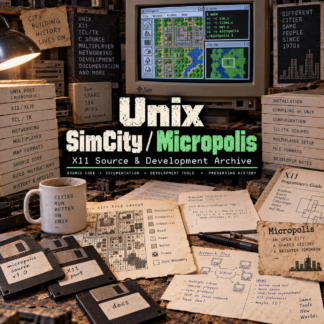
| 13 | Early 1990s | Early SimCity development material: X11 versions, multiplayer experiments, interface research, manuals, screenshots and experimental versions. Fantastic game-history archaeology. | Open example |
| 14 | 2000–present | A huge Super Nintendo music preservation project containing well over a thousand SPC sets with composer and company metadata. | Open example |
| 15 | Late 1990s onward | A giant Nintendo 64 MIDI archive. Thousands of sequenced game-music files survive here, many with original uploader or sequencer credits. | Open example |
| 16 | 1990s material / later preservation | A fan-built preservation project centered on old Nintendo magazine material. This is the sort of thing that survives because one stubborn person cared more than the publisher eventually did. | Open example |
| 17 | 1998–1999 | A surviving official Sonic Adventure promotional website from the Dreamcast era. Corporate web design itself becomes the artifact here. | Open example |
| 18 | 1990s | An old official F-Zero page still sitting in Nintendo’s web infrastructure, complete with encoding quirks modern browsers don’t particularly enjoy. | Open example |
| 19 | 2000s–present | A large video-game box-art gallery. High value for visual preservation because packaging is routinely discarded while the software survives. | Open example |
| 20 | 1990s onward | A shrine to the Dopefish, the intentionally stupid creature from Commander Keen that became an early recurring game-industry Easter egg. Early meme archaeology before people called everything memes. | Open example |
| 21 | 2000s | An entire page devoted to Longcat. Practically meaningless information; excellent cultural evidence. Sometimes a ridiculously long cat really is the historical record. | Open example |
| 22 | 2000s | A parody advice/Q&A page presented through General Zod. Hundreds of lines of committed fan humor—the kind of pointless, labor-intensive joke the independent Web excelled at. | Open example |
| 23 | Modern recreation of 1990s Web | A personal homepage intentionally constructed around GeoCities-era aesthetics. Useful evidence that old-Web design itself eventually became a cultural language people deliberately revived. | Open example |
| 24 | Researching the 1990s Web | A large curated directory of early-Web links. Particularly useful as a jumping-off point for discovering sites that search engines no longer surface naturally. | Open example |
| 25 | 1999 | An archive of hacked and defaced websites from 1999. It preserves a form of ephemeral hacker culture that usually vanished when administrators restored the affected server. | Open example |
| 26 | 1999 | A Stanford student project explaining viral replication. Not famous, but that’s precisely why it’s valuable: this is what ordinary academic publishing on the Web looked like in 1999. | Open example |
| 27 | Early 1990s material | An archive of the Bastard Operator From Hell stories—Unix/sysadmin humor involving backups, quotas, terminal users and an operator who absolutely should not have root access. A genuine artifact of early technical culture. | Open example |
| 28 | 2001–2004 | A man builds a homemade jet engine largely because he wants colder beer. Photographs, engineering explanation, Slashdot-era updates and glorious early-Web irresponsibility. | Open example |
| 29 | BBS-era culture / modern preservation | Software and documentation for rendering ANSI art, together with extensive BBS nostalgia material. Useful bridge between dial-up culture and the Web. | Open example |
| 30 | 2000s–present | An engineer, musician and programmer’s independent site full of electronics, old computers, demos, music and technically obsessive projects. A personal website as a person’s brain laid out as directories. | Open example |
| 31 | 2010s | A physically gigantic transistor-level implementation of the MOS 6502 processor. Not ancient Web, but exactly the kind of unusually deep independent technical contribution the small Web still produces. | Open example |
| 32 | 1990s–2000s tradition | A community for people building CPUs from discrete logic rather than merely emulating them. The value is the documentation left by obsessive hardware builders. | Open example |
| 33 | 2000s–present | Chuck Moore’s radically minimalist colorForth environment and related hardware work. Historically interesting as both programming-language research and a very personal conception of computing. | Open example |
| 34 | 1995–present | NASA’s Astronomy Picture of the Day. One of the great long-running Web institutions: simple HTML, one astronomical image, explanation, repeat tomorrow. | Open example |
| 35 | 1990s educational Web | A NASA learning center for young astronomers. Very characteristic of the era when institutions created purpose-built educational websites rather than pushing children toward an app. | Open example |
| 36 | 2000s–present | A comprehensive independent antenna-engineering tutorial covering fundamentals, arrays, impedance matching, measurement and design. Strong example of one expert giving away an enormous amount of specialist knowledge. | Open example |
| 37 | Site begun 1996; subject 1897–1927 | A meticulously assembled history of early American radio, including telegraphy, broadcasting and technical developments. Deep, specialist historical work in classic-web form. | Open example |
| 38 | Old-Web specialist reference | Antique-radio restoration, repair and collecting information. The value is practical knowledge that can disappear when the handful of people who know it stop maintaining pages. | Open example |
| 39 | 2000s–present | A substantial museum of cryptographic and intelligence hardware: cipher machines, spy equipment, secure communications and related technical history. | Open example |
| 40 | 1990s/2000s onward | A massive technical and historical reference concerning nuclear weapons, test programs, arsenals and primary documents. Far beyond a hobby homepage in depth. | Open example |
| 41 | 2000s–present | A World War II U-boat archive built around documents, photographs and war diaries. Primary-source military history preserved in a specialist web archive. | Open example |
| 42 | 1990s–present | A scholarly archive of Nazi and East German propaganda containing original speeches, posters, visual material and instructions written for propagandists. Valuable as primary-source historical research, not endorsement. | Open example |
| 43 | 2000s; subject antiquity | Detailed research on more than 100 Roman aqueducts with original photographs and a large bibliography. A private site reaching near-scholarly-reference depth. | Open example |
| 44 | 1996–2009 | Civil War poetry and music organized by title, author and opening line, including period material and MIDI—a very 1990s combination of scholarship and homepage craft. | Open example |
| 45 | Old-Web gallery; subject 1930s | A large collection of Dorothea Lange photographs of Dust Bowl migrants accompanied by original FSA captions. Strong historical source material presented through extremely simple HTML. | Open example |
| 46 | 1994–present | A sprawling scholarly resource on Victorian history, literature, economics, science, art, technology and religion. A major example of long-lived Web scholarship. | Open example |
| 47 | Old-Web specialist reference | A collector’s photographic and descriptive reference to Roman coinage from Malta. The sort of niche expertise that once routinely lived on personal sites. | Open example |
| 48 | 2000s–present | Naval history and family-history research material with ship, casualty, campaign and personnel information. A serious volunteer-built research resource. | Open example |
| 49 | 1990s/2000s fan Web | A deeply developed alternate-history naval fleet complete with fictional ship classes, histories and technical thinking. The historical value is less naval fact than the amount of worldbuilding people once poured into standalone sites. | Open example |
| 50 | 1990s–present | A massive roller-coaster database cataloging rides, parks, manufacturers and statistics worldwide. A hobbyist database that effectively became infrastructure for an entire enthusiast community. | Open example |
| 51 | 2000s–present | A specialist archive following modern airships and lighter-than-air projects. Narrow topic, substantial accumulated knowledge. | Open example |
| 52 | 2000s–present | Detailed Great Lakes ship-model work and maritime history. Another case where craftsmanship and historical documentation merge. | Open example |
| 53 | 2000s–present | A database devoted to ships built on the River Tyne and their builders—excellent industrial and maritime-history material assembled outside a major institution. | Open example |
| 54 | 2000s–present | An enormous Michigan railroad photograph collection with locomotive, depot and route history. Local-history material of exactly the kind most vulnerable to disappearing. | Open example |
| 55 | Modern preservation; subject late 1990s–2000s | A whole community built around Sony’s floppy-disk digital cameras, including manuals, conversion tools, galleries and advice for moving ancient low-resolution images onto modern machines. | Open example |
| 56 | Old-Web collection; subject 1850s–1900s | Antique phonographs, wet-plate photography and early Kodak cameras. Deep firsthand collecting knowledge published independently. | Open example |
| 57 | Circa 1998–present | Detailed research on Victor and Victrola machines from 1901–1929, including serial and model research maintained over decades. | Open example |
| 58 | Old-Web technical reference | A full scientific-glassblowing learning center: burners, lathes, annealing, seals, repairs, shop design and safety. The Internet at its best: absurdly specific and genuinely useful. | Open example |
| 59 | 1990s–present | An enormous orchid encyclopedia with photographs, synonyms and references covering thousands of species. Essentially one person’s specialized botanical encyclopedia. | Open example |
| 60 | 2000s–present | Woodworking for engineers: homemade machinery, jigs, mechanisms, experiments and practical woodworking. A personal technical publishing operation masquerading as a homepage. | Open example |
| 61 | 1990s–present | A gigantic repository of scanned camera manuals, flash manuals and photography documentation. Much of its value comes from preserving instructions for hardware manufacturers stopped caring about decades ago. | Open example |
| 62 | Old-Web museum | A detailed slide-rule collection covering manufacturers, models, scales and calculating history. Precisely the sort of obsolete knowledge the Web became strangely good at preserving. | Open example |
| 63 | 2000s–present | A photographic periodic table built around actual samples of elements instead of just symbols and atomic weights. Both educational and gloriously obsessive. | Open example |
| 64 | 2000s–present | An independent technical resource about coffee cultivation, processing, roasting and brewing. The Web also archived people’s refusal to be normal about beverages. | Open example |
| 65 | 1990s/2000s onward | A huge multilingual encyclopedia of spices, including botany, etymology, geography and culinary usage. Another one-person-reference-work class of site. | Open example |
| 66 | Old-Web reference; subject medieval | Medieval recipes and culinary research, including reconstructed recipes and source texts. Useful to both historians and reenactors. | Open example |
| 67 | 1998–2009 | A composer’s hand-coded MIDI homepage with original music, game music, tutorials, webring links and personal Web artifacts. This one practically comes with carbon dating. | Open example |
| 68 | 2000s | A detailed explanation of Pilish: writing prose in which successive word lengths encode the digits of pi. Utterly unnecessary. Completely wonderful. | Open example |
| 69 | 2000s | A basement experiment intended to demonstrate the gravitational attraction between ordinary objects using commonplace materials. Serious physics delivered with personal-page humor. | Open example |
| 70 | 1990s/2000s Web tool | An interactive Earth-and-Moon viewer—representative of the era when a clever individual could build a specialized scientific visualization and simply put it on the Web for everyone. | Open example |
| 71 | 2010s | A photographic walkthrough of physically opening integrated circuits to expose and inspect the silicon die. Later than the classic Web period, but a superb independent technical contribution. | Open example |
| 72 | 2000s–present | A technically rigorous attempt to reproduce the color output of the original NES, including composite-video palette analysis. Extreme detail devoted to a problem most people don’t know exists. | Open example |
| 73 | 2000s–present | A huge searchable catalog of old PC games. Its value is partly archival and partly showing how abandonware culture attempted to preserve software mainstream retailers had left behind. | Open example |
| 74 | Around 2000 | Screenshots from a bizarre Unix experiment that turns running processes into enemies inside Doom. Killing the monster could kill the corresponding process. Sysadmin education by shotgun. | Open example |
| 75 | Early 2000s | Ken Silverman’s voxel-engine project, including technical notes and demonstrations. Valuable game-engine history from the programmer himself rather than a retrospective article written twenty years later. | Open example |
| 76 | 1990s-style game Web | A large body of Doom level reviews and commentary. An example of fan criticism before video platforms and algorithmic discovery swallowed most game discussion. | Open example |
| 77 | 1990s onward | A site promoting controversial forbidden-archaeology claims. Scientifically dubious material can still have research value as documentation of fringe thought and how alternative-history communities used the Web. | Open example |
| 78 | 2000s onward | A substantial crop-circle archive. The research value isn’t necessarily that its interpretations are correct; it’s a preserved body of fringe culture, imagery and belief. | Open example |
| 79 | 1997 survivor | The surviving website associated with the Heaven’s Gate religious group. Dark material, but unquestionably significant as a near-intact artifact of how a real 1990s group represented itself online. | Open example |
| 80 | 2000s fan Web | An elaborate fictional Starfleet museum containing dozens of invented vessel classes, timelines, illustrations and technical histories. Fan work elevated into a full virtual institution. | Open example |
| 81 | 2000s | A tiny utility that visually compares display and television sizes. Nothing grand—just a person solving one annoying problem on a webpage. That’s old-Web DNA. | Open example |
| 82 | 1998–present | A long-running personal game-review and culture site. Its homepage still reads like a letter from the owner rather than a publication designed by committee. | Open example |
| 83 | 1990s/2000s museum Web | A virtual museum of vintage video equipment navigated as physical rooms on an image map. Even the interface is part of the artifact. | Open example |
| 84 | More than 20 years online | A huge independent archive documenting American roadside architecture—old gas stations, signs, diners, theaters, giant statues and mid-century buildings. An extraordinary preservation project. | Open example |
| 85 | 2000s–present | An academic’s enormous collection of optical illusions and visual-perception experiments. It sits somewhere between scientific resource and Internet funhouse. | Open example |
| 86 | 1990s–present | A giant international reference for card-game rules. A classic example of the Web becoming authoritative simply because somebody kept documenting the thing longer and better than everyone else. | Open example |
| 87 | 2000s | A gigantic breakfast-food database with recipes, cereal history and reviews. Not civilization-changing. Still an impressively complete monument to breakfast. | Open example |
| 88 | Old-Web digital library | Thousands of pages of freely readable older books and texts. Independent digitization projects like this helped put public-domain literature online long before giant ebook platforms dominated discovery. | Open example |
| 89 | 2000s preservation; subject 1980s–2000s | A collector’s museum of electronic organizers and PDAs—the strange evolutionary branch between pocket calculators and smartphones. | Open example |
| 90 | 2000s | An entire website dedicated to pi trivia, humor, games and mathematical oddities. Proof that the old Web was perfectly willing to support a whole site because someone liked one number a little too much. | Open example |
| 91 | 2000s–present | A specialist organization documenting natural arches and bridges, including identification and preservation work. Niche geographic knowledge accumulated over years. | Open example |
| 92 | 1990s-style reference | An Internet glossary of nuclear terminology—essentially a hyperlinked technical dictionary constructed specifically for Web browsing. | Open example |
| 93 | 1990s commercial Web | A surviving Macintosh upgrade and accelerator company’s website. Particularly useful because obsolete commercial pages preserve hardware compatibility and product details that glossy corporate histories ignore. | Open example |
| 94 | 1990s/2000s onward | A museum of electronic handheld games—LCD games, tabletop units and pre-smartphone portable entertainment that otherwise often survives only as auction listings. | Open example |
| 95 | 2000s | A photographic museum devoted specifically to vintage CPUs. Tiny ceramic packages and obscure processor variants receive museum-level attention. | Open example |
| 96 | 2000s | A collector and reference site for antique microscopes. Useful because it preserves specialized identification knowledge outside a formal museum catalog. | Open example |
| 97 | Old-Web cultural reference | A huge hand-built collection concerning Kurdish history and culture. Valuable both for its subject matter and as an example of minority cultural material finding independent publishing space online. | Open example |
| 98 | 1990s fan Web preserved later | A backup of an old Castlevania fan site. Classic shrine structure: game information, fan material and deep franchise obsession assembled before centralized fandom wikis took over. | Open example |
| 99 | Old independent music Web | A website for a small Star Trek-themed punk band. Almost zero world-historical significance—which makes it perfect evidence of the Web ordinary people actually made. | Open example |
| 100 | 1990s/2000s onward | A specialist vintage-fountain-pen site containing identification, history and collector information. Another deep body of knowledge created because an individual cared enough to document it. | Open example |
What this is—and what it isn’t
This product is a research index of public Web locations. It does not claim ownership of the third-party pages or their contents. A URL may move, disappear, change ownership or stop responding after the list is delivered. The Web is exceptionally good at eating its own history.
Some entries contain scholarly or technically rigorous work. Others document fandom, folklore, fringe beliefs, personal hobbies, jokes or obsolete commercial material. Inclusion means the page was interesting enough to preserve in the research corpus; it does not mean CacheRat endorses every claim made by every linked site.
For researchers, this messiness is part of the value. Museums preserve masterpieces. The old Web also preserved breakfast databases, MIDI shrines, weird hardware experiments, fan pages, hand-coded reference works and somebody’s extremely serious opinion about one obscure machine.
Useful for
Internet history, classic Web research, digital archaeology, retrocomputing, old websites, independent Web discovery, personal-homepage research, Web-design history, cultural research, archival exploration, link archaeology and building your own old-Web research corpus.